Scope
User research, concept definition, UX flows, interaction design, UI design, prototyping.
Overview
Many people intend to sleep earlier but struggle to disconnect from their phones. Existing sleep apps often rely on strict routines, heavy tracking, or rigid structures that don’t match real-life behavior.
This project focused on designing a more flexible and approachable experience — one that supports users in building better habits without adding friction or pressure.
The Problem
Users know they should sleep earlier, but intention doesn’t translate into action.
Late-night phone use is driven by habit, low energy, and the need to unwind — not by lack of awareness. At the same time, many sleep apps feel too demanding or structured, which discourages consistent use.
The real challenge is not educating users about sleep — it’s helping them act on it when they’re already tired.
Research & Discovery
To better understand user behavior, I conducted:
5 user interviews
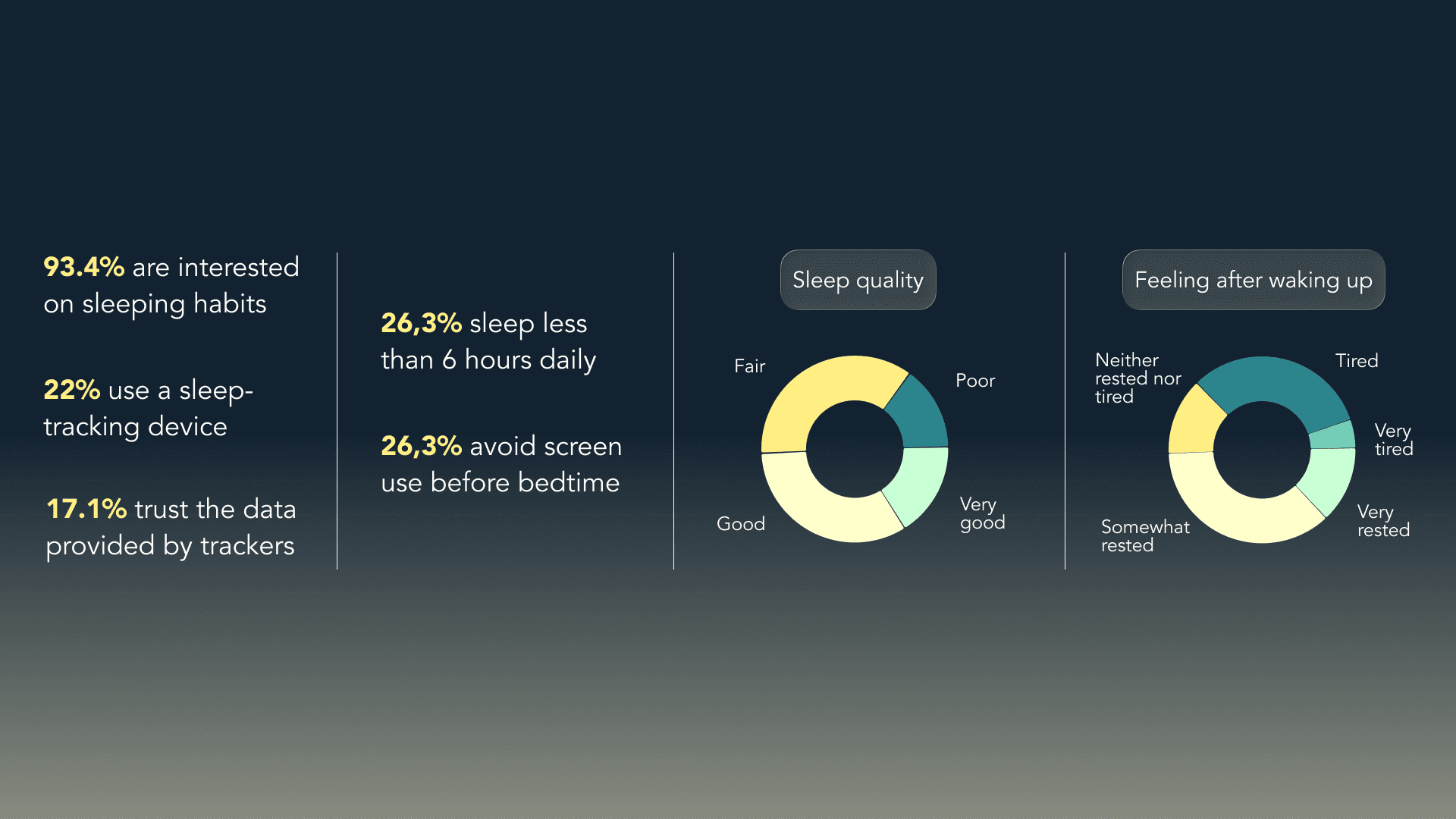
an online survey
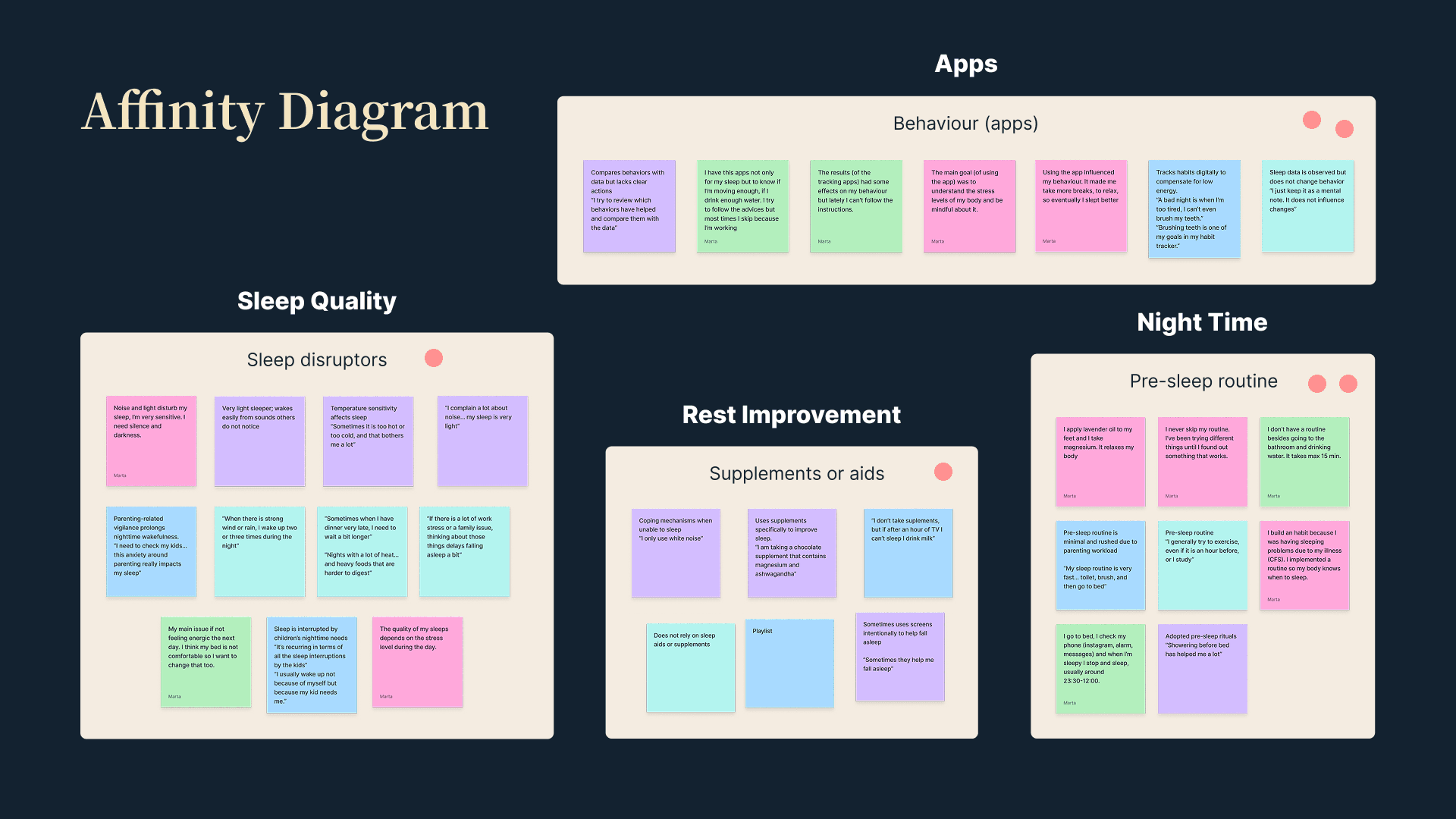
Key patterns from research
Instead of summarizing broadly, here are concrete observations that shaped the direction:
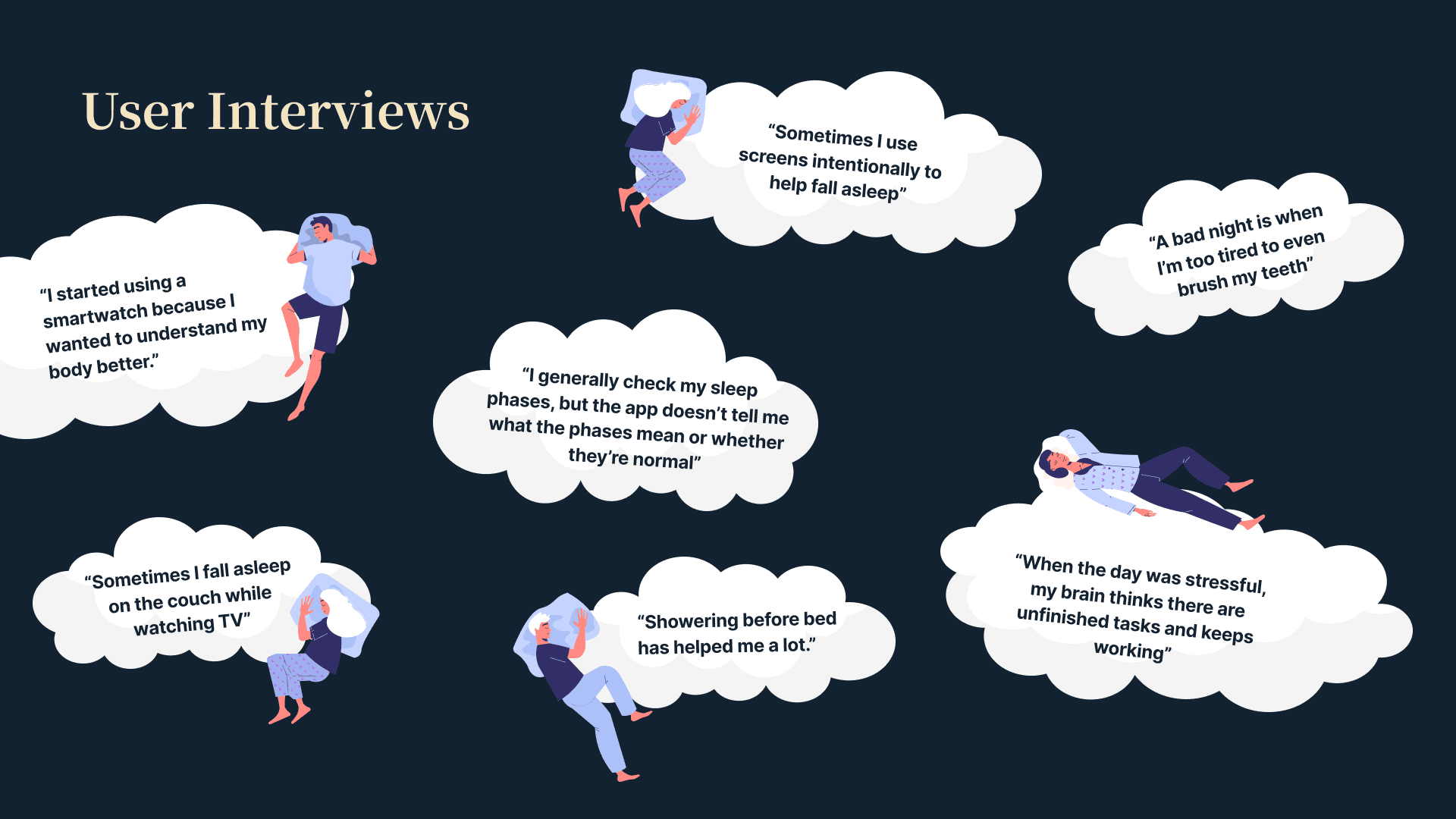
Several participants said they plan to sleep earlier but end up scrolling on their phone “just a bit longer,” even when already tired
Users described evenings as a low-energy state, where they don’t want to think or make decisions
Participants expressed frustration with sleep apps that require strict routines or too much setup
Many users rely on their phone to relax, even though they know it delays sleep
What this means
The problem isn’t lack of tools.
It’s a mismatch between user energy levels at night and the effort required to follow a routine.
Key Insights
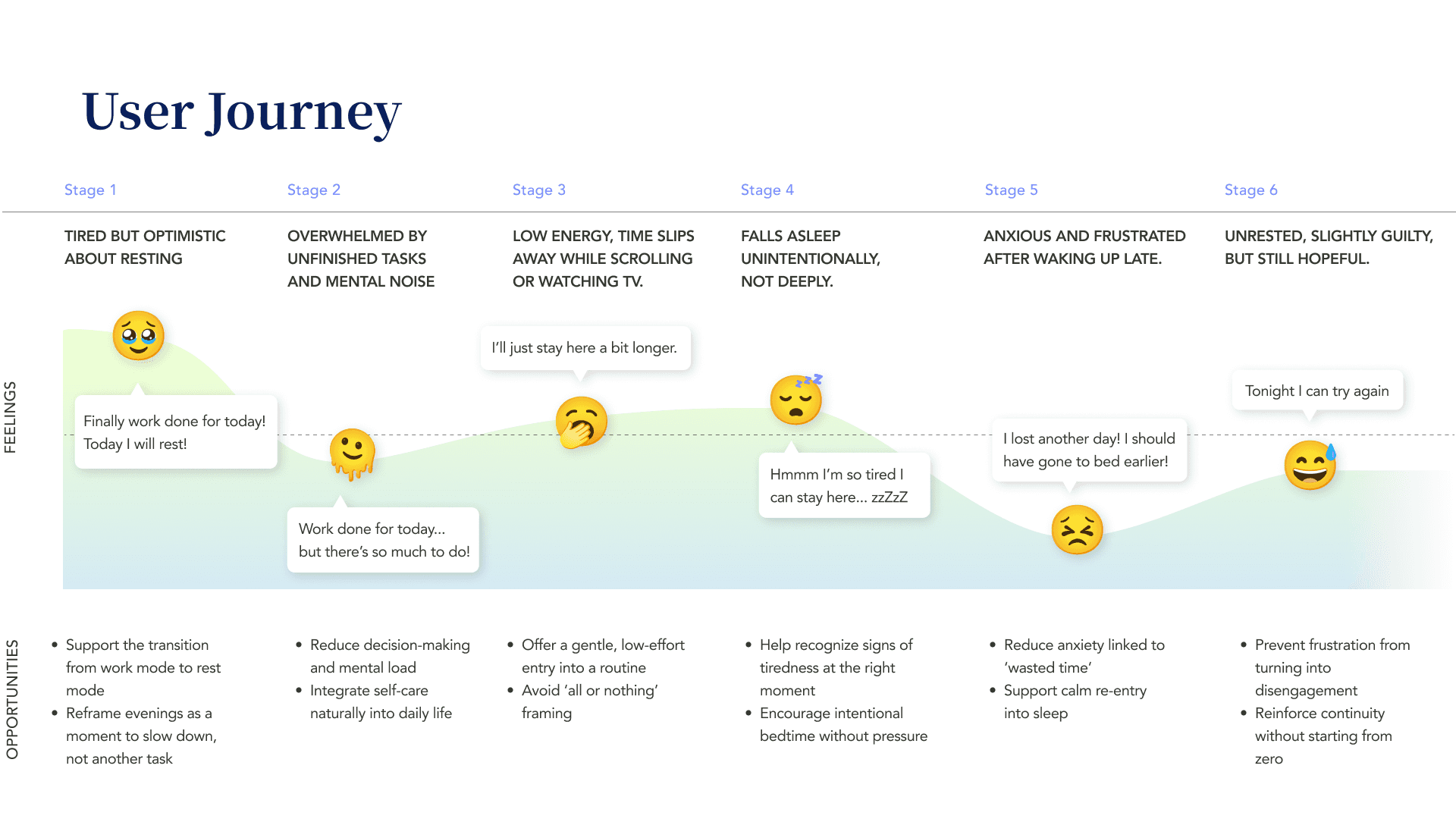
1. Evenings are low-energy moments
Users are mentally tired and less willing to engage with complex interfaces.
2. Intentions collapse under friction
Even small decisions or setup steps can break the flow toward sleep.
3. Flexibility matters more than discipline
Users resist rigid routines but are open to lightweight guidance.
Defining the Opportunity
How might we help users transition into sleep with minimal effort, while respecting their need for flexibility and low cognitive load?
This led to three design principles:
reduce effort
support flexibility
guide without forcing
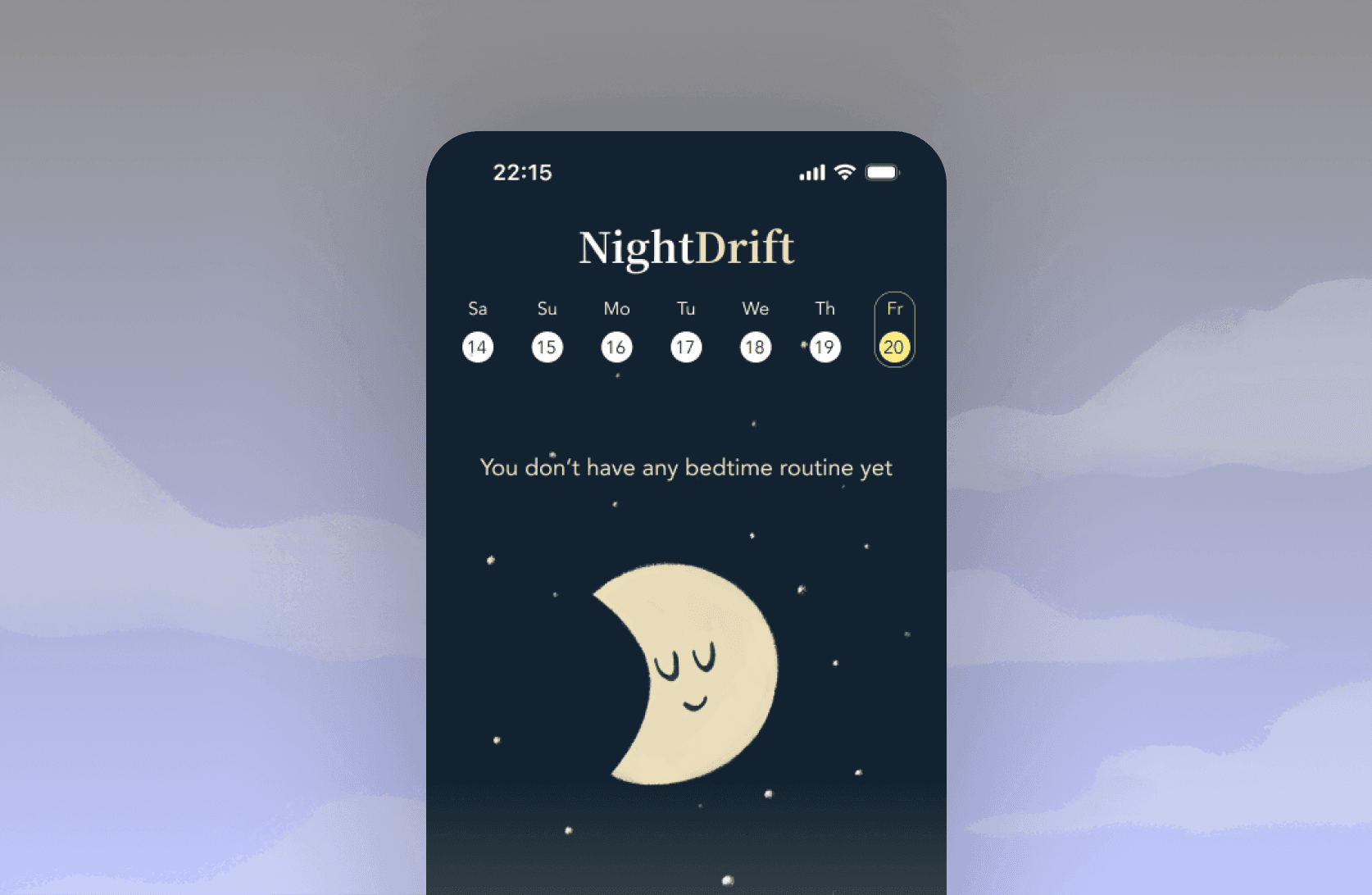
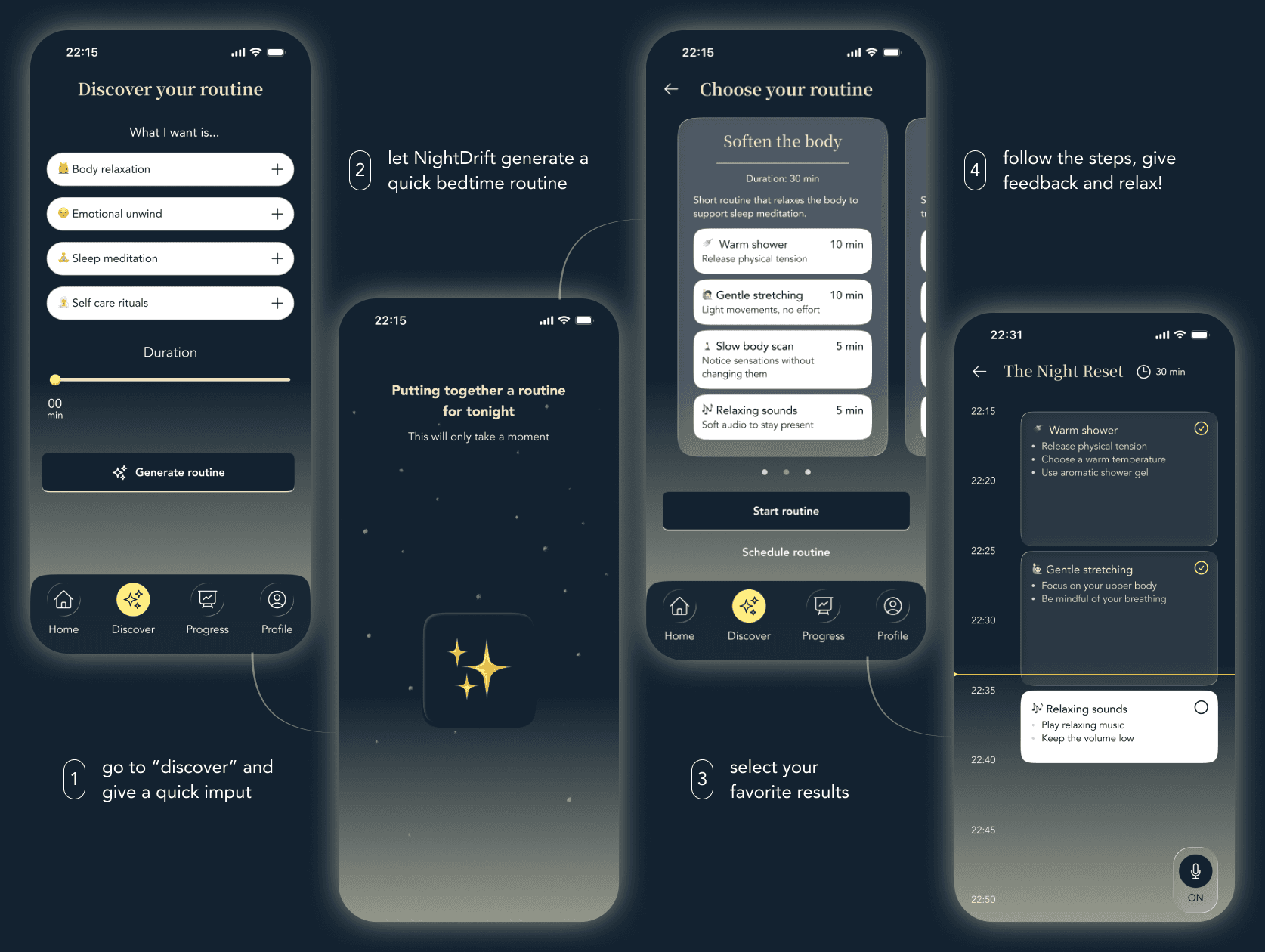
Nightdrift introduces a lightweight bedtime routine system designed to work with users’ real behavior instead of against it.
The experience focuses on:
quick routine setup
minimal interaction
optional voice support
calm, non-intrusive guidance
Design Decision 1: Reduce cognitive load with quick routine setup
Insight
Users are mentally tired at night and don’t want to configure complex routines.
Design Decision
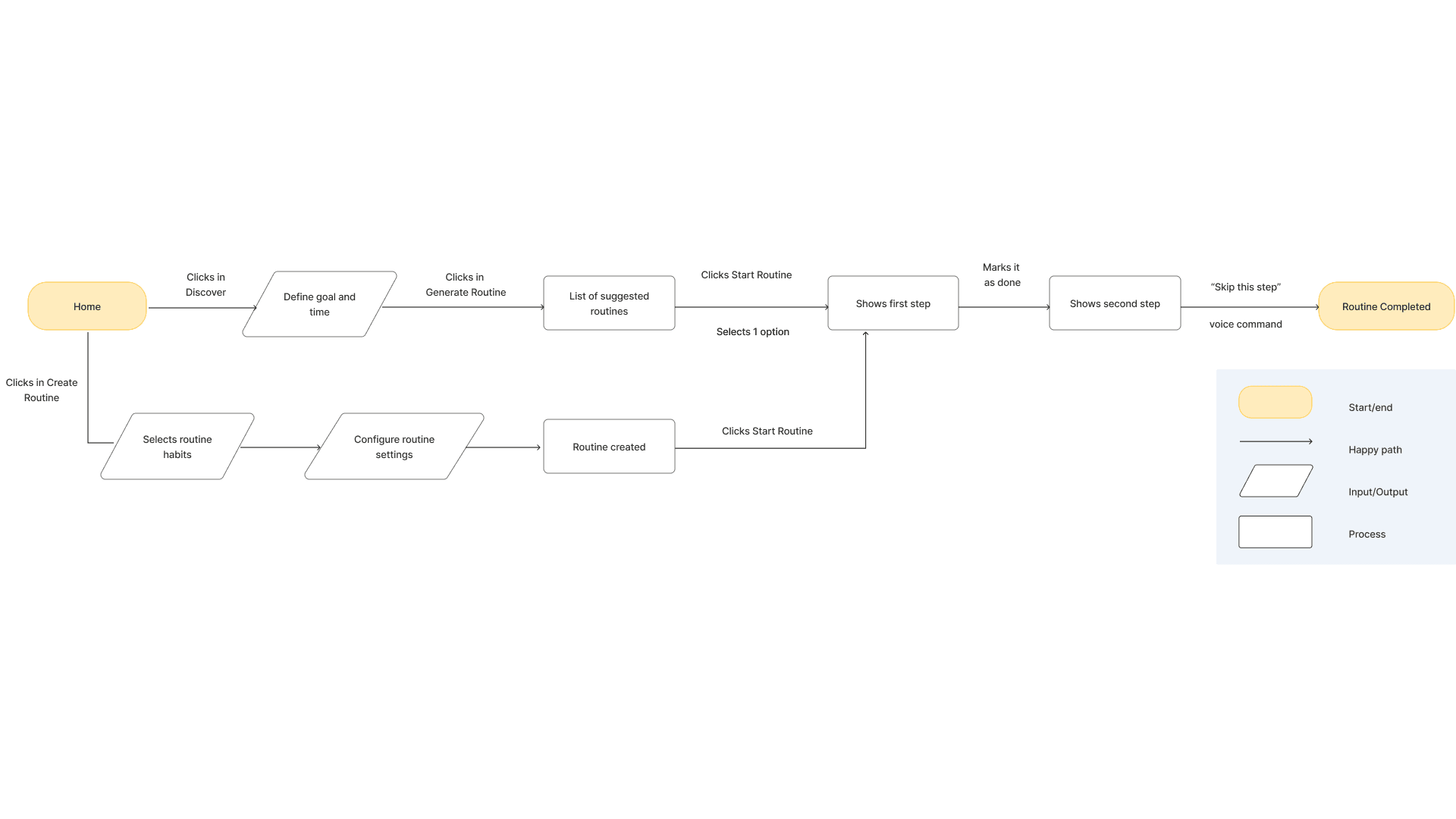
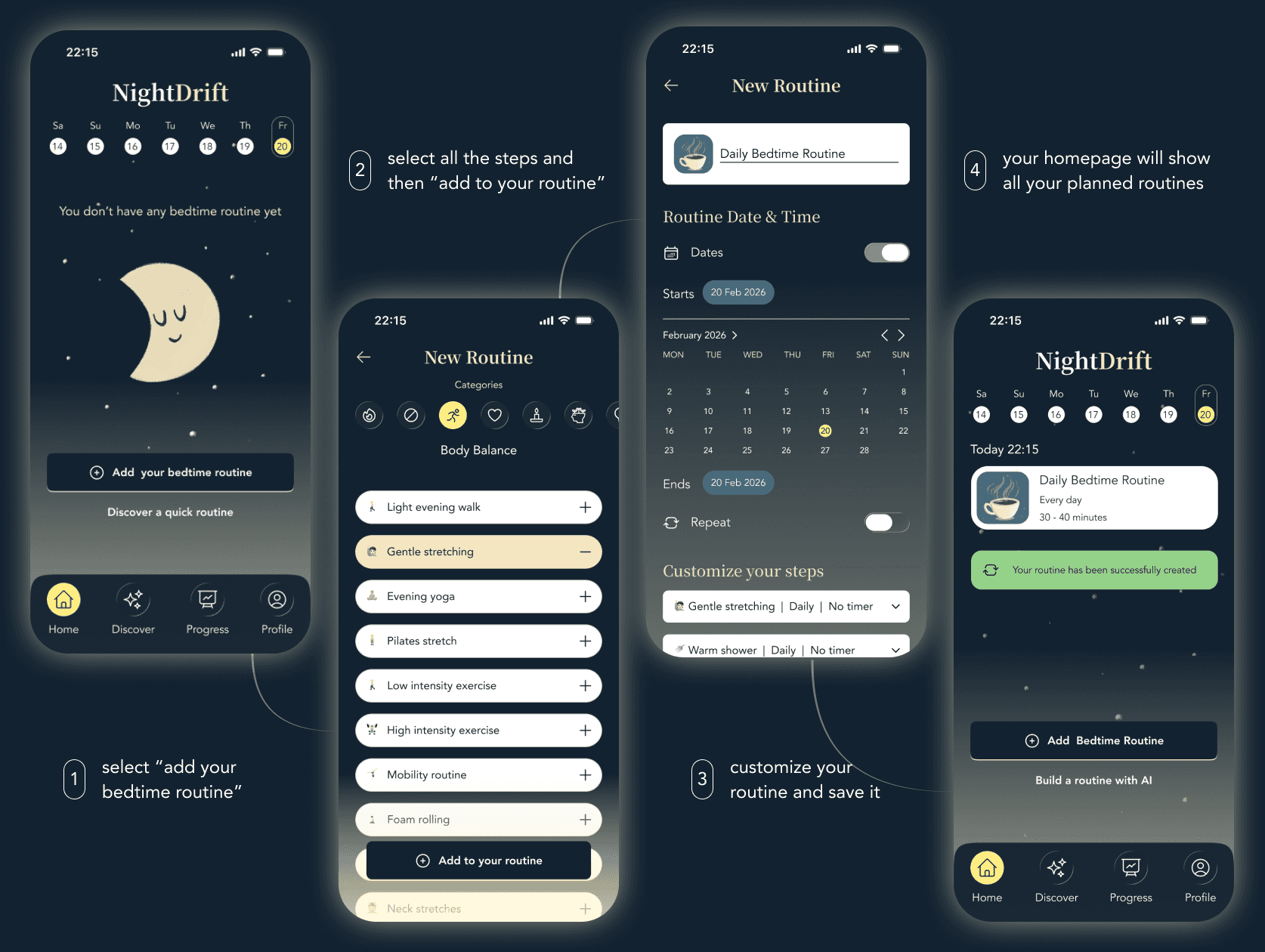
I designed a quick routine generator where users:
set a goal (e.g. sleep earlier, relax, disconnect)
choose a target time
receive a pre-built routine in seconds
Outcome
This removes the need for decision-making at night and lowers the barrier to starting a routine.
Design Decision: Support flexibility instead of rigid structure
Instead of enforcing strict routines, Nightdrift allows users to:
adjust routines easily
skip steps without penalty
follow guidance at their own pace
This reflects real behavior — users want help, not pressure.
Multimodal Interaction (Voice)
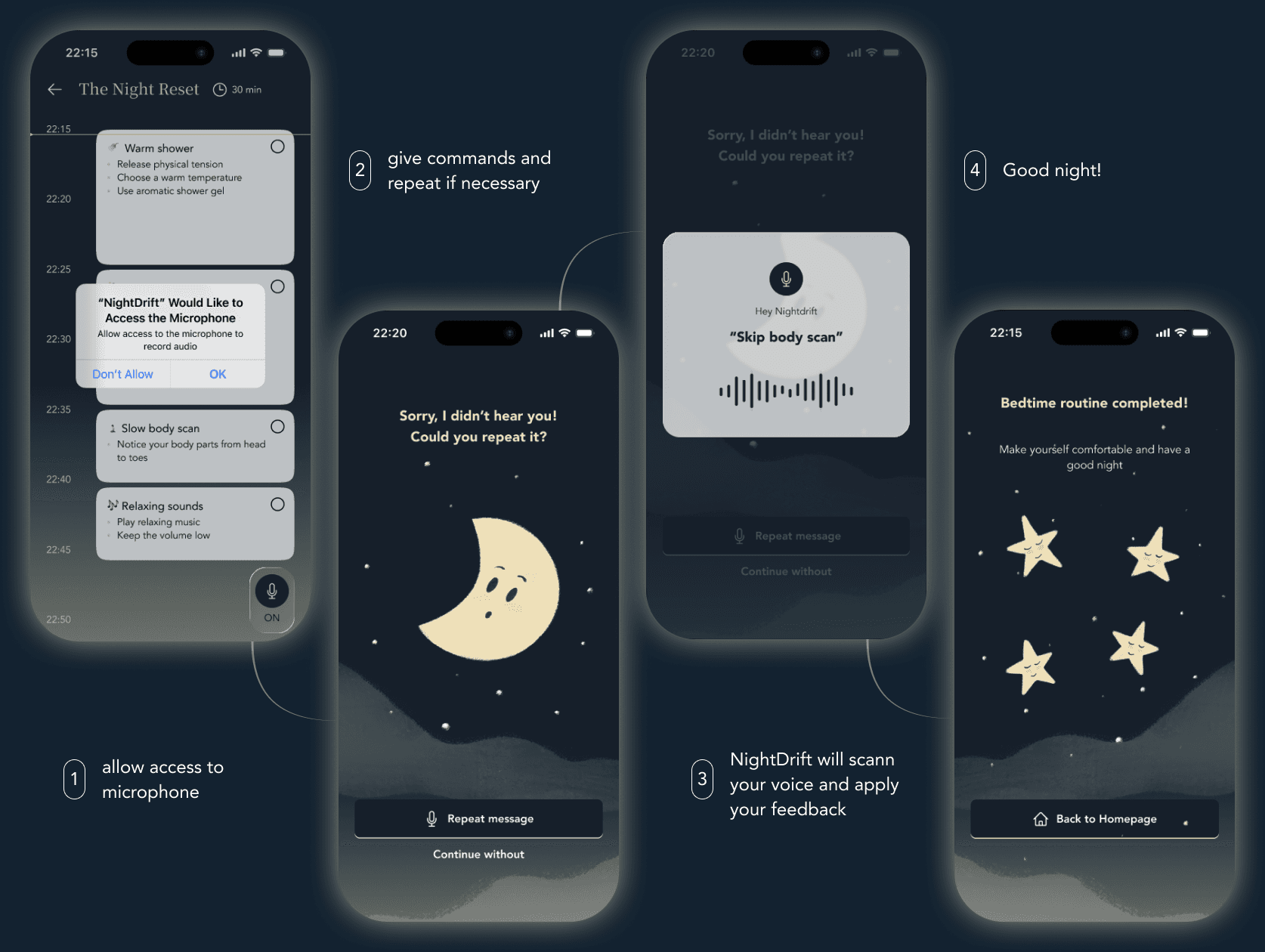
One of the key ideas in Nightdrift is integrating voice interaction into the bedtime experience.
Why voice?
At night, users:
are physically relaxed (often lying down)
want minimal interaction
may not want to look at bright screens
Voice allows users to interact without breaking that state.
Example use cases
Users can:
“Start my routine”
“Skip this step”
“Set alarm for 7am”
“Play relaxing sounds”
Problem it solves
Voice reduces:
physical effort (no tapping through screens)
cognitive load (no navigation)
screen exposure before sleep
It supports a more natural transition into rest.
Visual Design
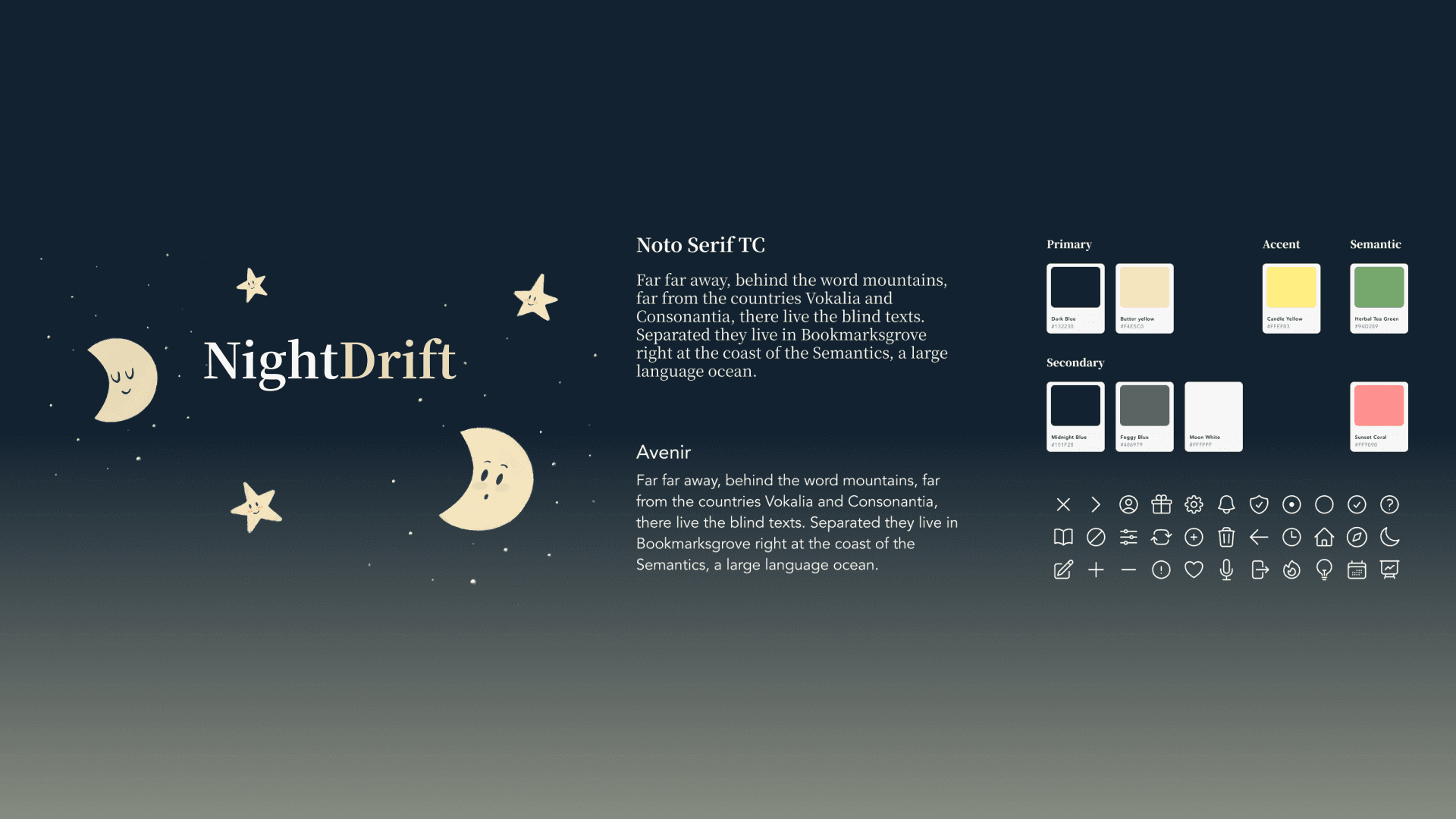
The visual direction focuses on calmness, clarity, and low stimulation:
dark interface to reduce light exposure
soft color accents
minimal layout and clear hierarchy
The goal was not to gamify sleep, but to create a quiet, supportive environment.
Outcome
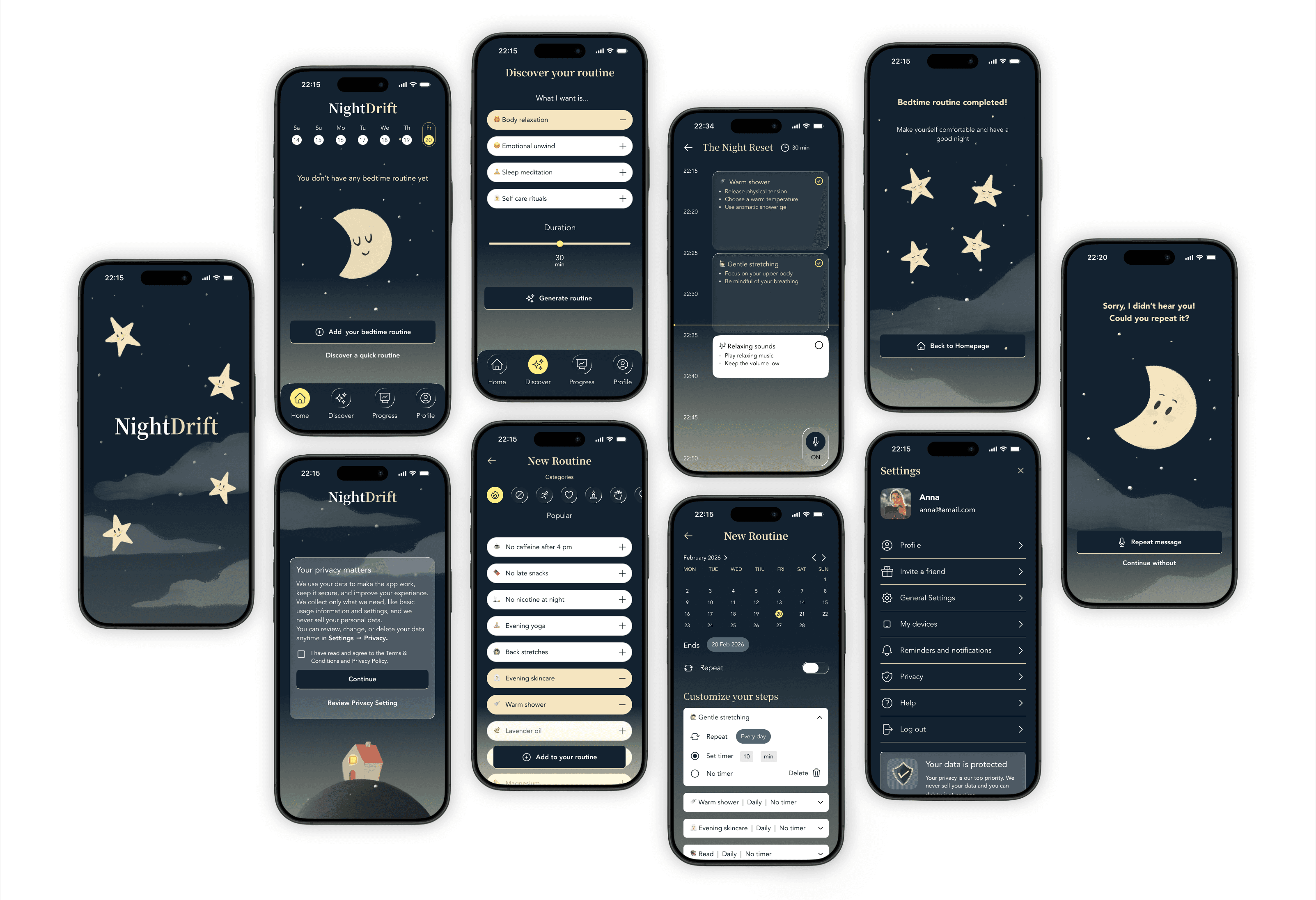
Nightdrift presents a different approach to sleep support:
less structure, more flexibility
less tracking, more guidance
less effort, more accessibility
The concept demonstrates how aligning design with real user behavior — especially low-energy contexts — can make habit-building more achievable.
Reflection
One of the most interesting takeaways from this project was how strongly context affects usability.
Designing for nighttime behavior is fundamentally different from designing for daytime productivity. Users are not motivated, focused, or patient — they are tired. That changes what “good UX” means.
If I had more time, I would:
test the voice interaction more deeply in real scenarios
explore passive or ambient interactions (e.g. automatic transitions)
validate long-term engagement with the routine system
This project reinforced the importance of designing not just for tasks, but for user energy levels and real-life conditions.