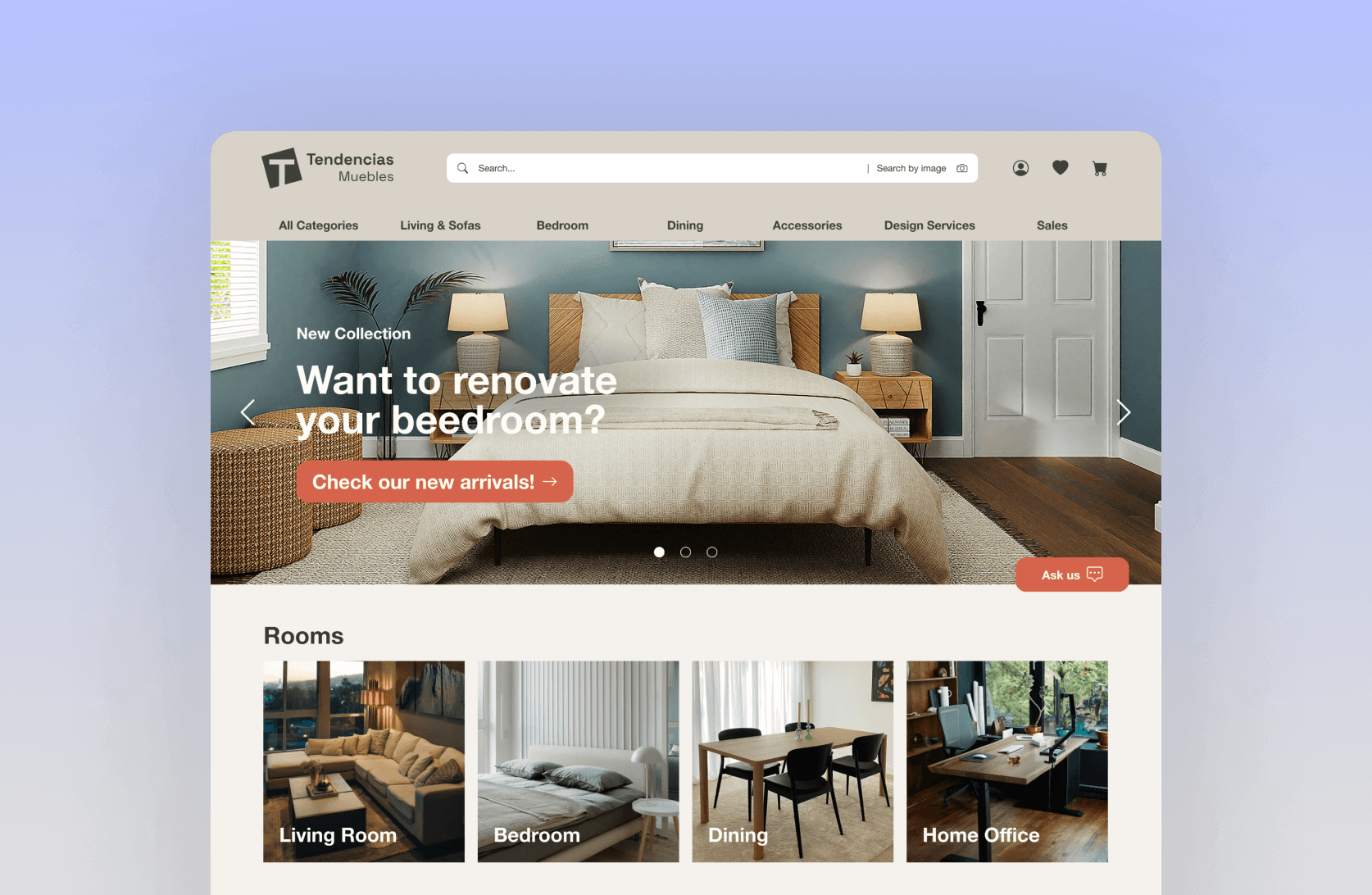
Furniture e-commerce comes with a structural problem: users rarely buy immediately. Most customers research online but purchase later — often in-store or after long consideration cycles.
For Tendencias Muebles, this gap was critical. The website attracted users, but it wasn’t effectively helping them decide — meaning potential sales were lost before conversion
The Problem
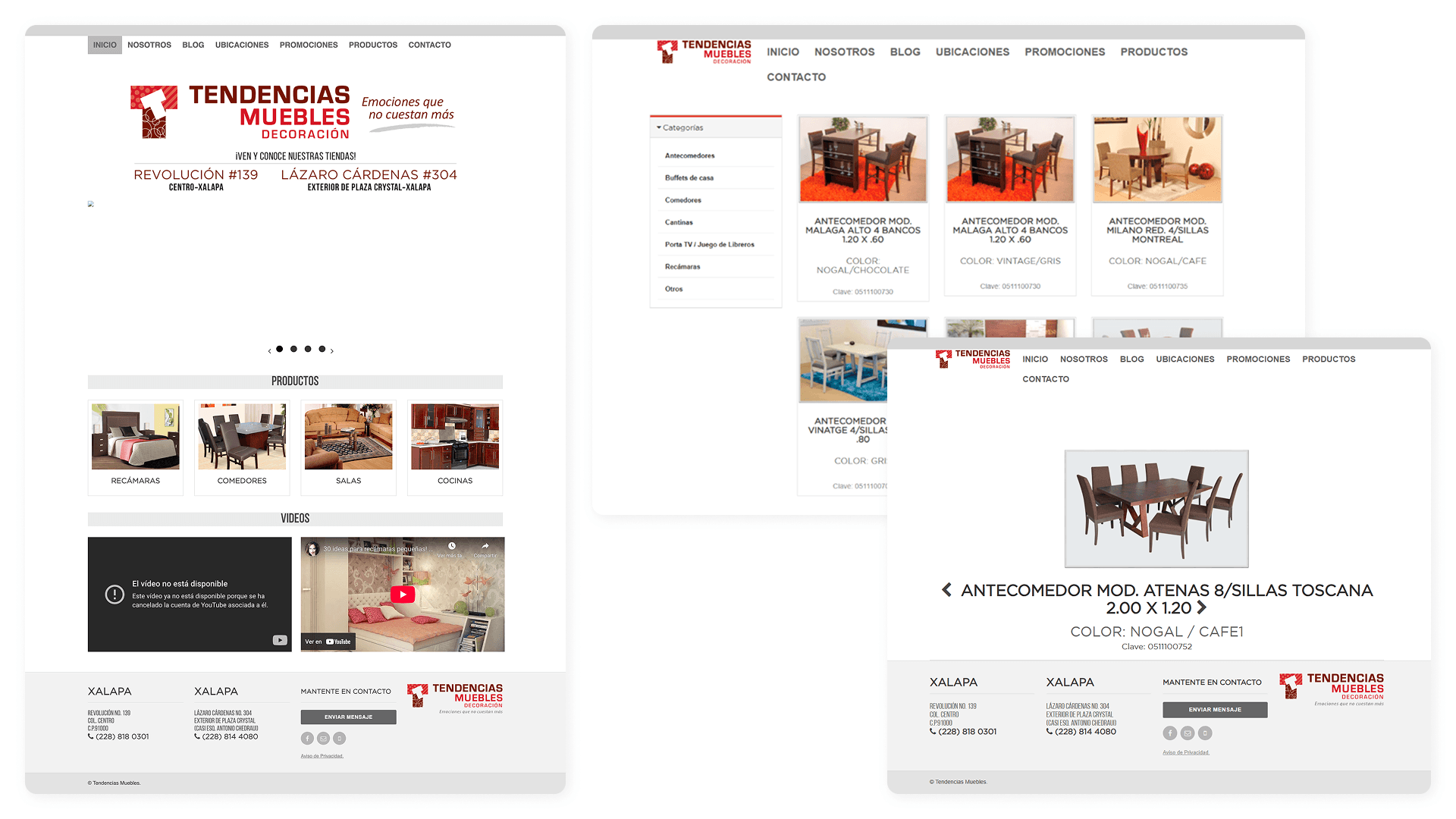
The existing website functioned mainly as a product catalog, offering limited information and little support for decision-making.
From stakeholder interviews and early analysis, one issue became clear:
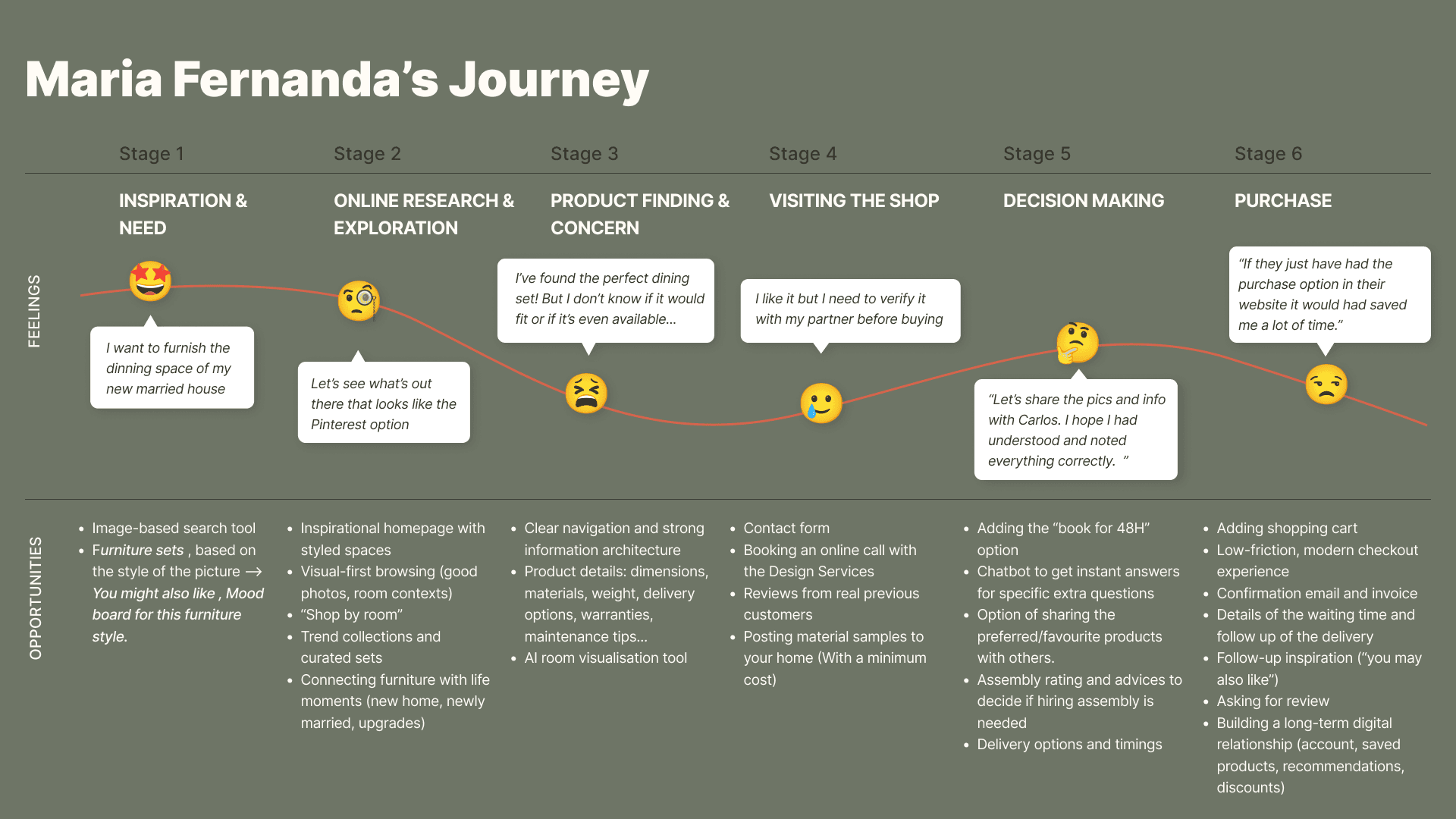
Most customers start their journey online, but many drop off before reaching a purchase decision.
Users were not necessarily leaving because of price or availability — they were leaving because they didn’t feel confident enough to commit.
Research & Discovery
To understand where trust was breaking, the team conducted:
user interviews
stakeholder interviews (CEO)
competitive analysis
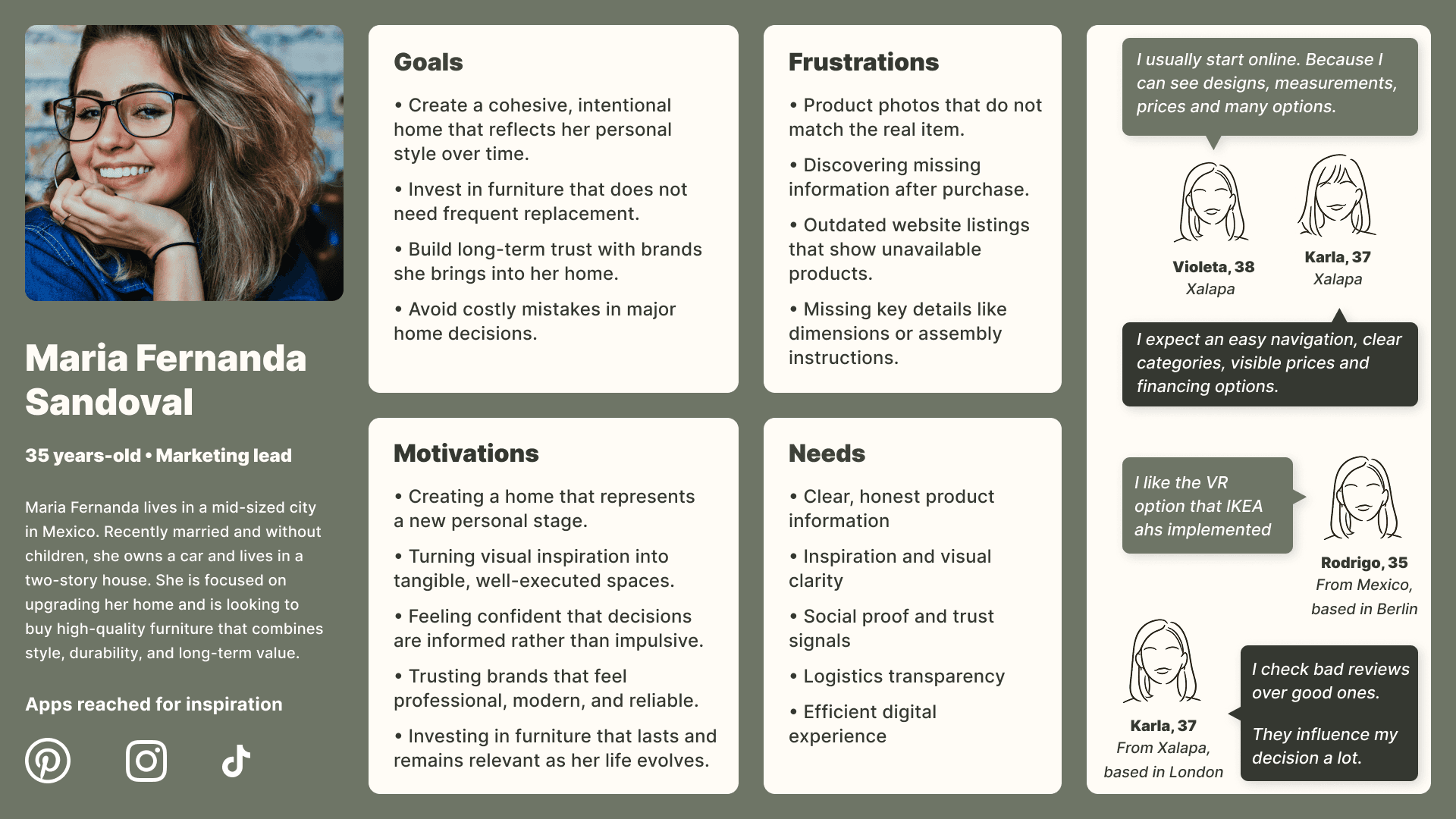
Concrete findings from users
Instead of generic insights, here are the kinds of behaviors observed:
Users said they often compare multiple sites but hesitate to commit because they lack enough product detail
Several participants mentioned they don’t trust product photos alone and want more context (size, materials, real-life usage)
Users described furniture shopping as a “risky” purchase, where mistakes are expensive and hard to reverse
Many users browse online but still prefer visiting stores to “confirm” their decision physically
These findings align with broader industry behavior: users rely heavily on online research but still seek reassurance before buying.
Key Insights
1. Furniture purchases are high-risk decisions
Users need reassurance before committing.
2. Online browsing is part of a longer journey
The website must support decision-making, not just display products.
3. Lack of information breaks trust
Users hesitate when product context is missing or unclear.
Defining the Opportunity
How might we help users feel confident enough to move forward with a purchase decision — even before visiting the store?
This reframed the website’s role:
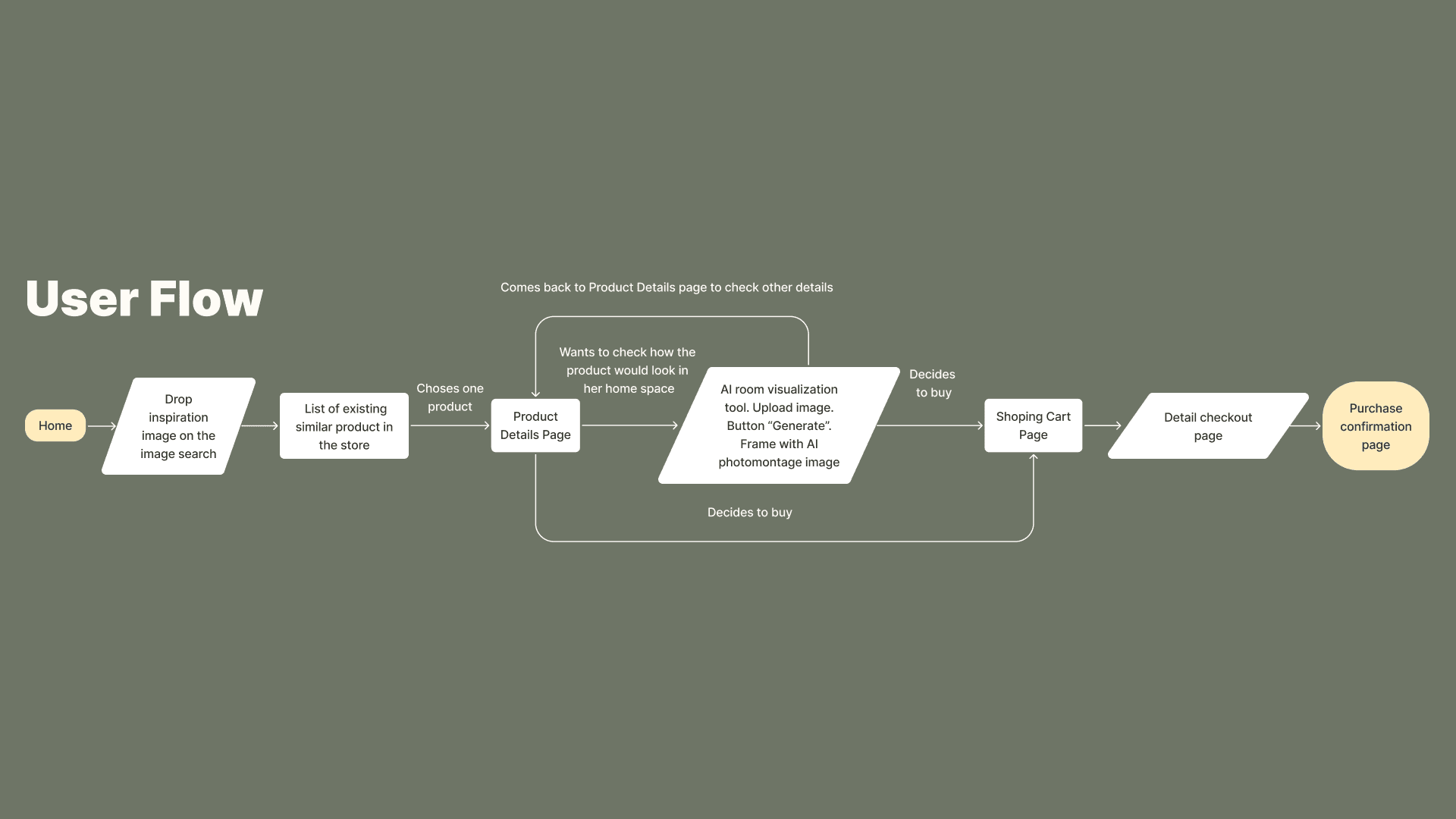
From catalog → decision-support system
We redesigned the experience around one core principle:
build trust at every step of the decision process
The solution focused on:
improving product understanding
reducing uncertainty
supporting comparison and evaluation
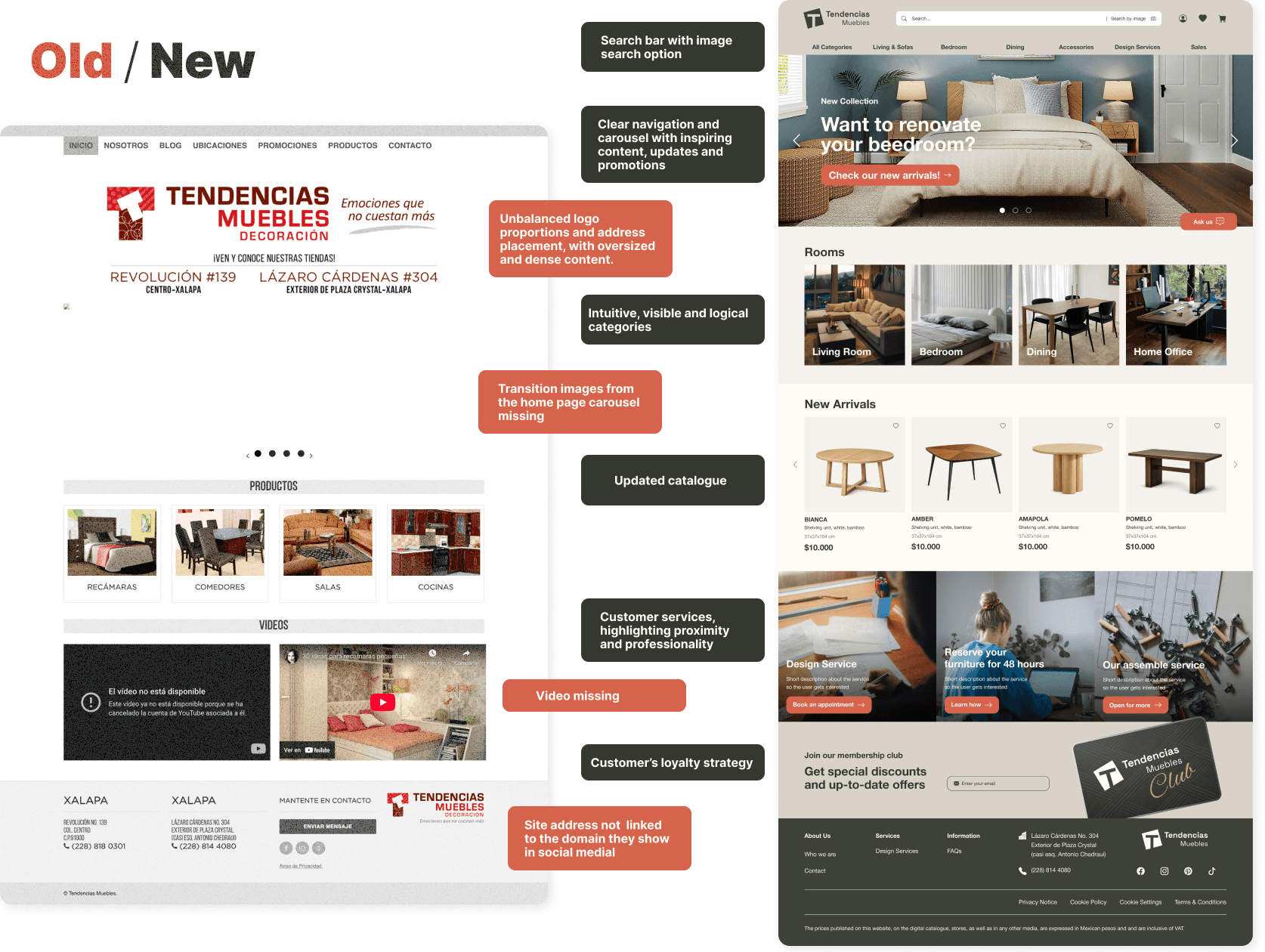
Design Decision 1: Increase trust through product transparency
Insight
Users hesitate because they lack enough information to feel confident in their choice.
Design Decision
We redesigned product pages to include:
clearer product details (dimensions, materials, context)
improved visual hierarchy
more informative imagery
structured information to support comparison
Outcome
Users can better understand what they are buying, reducing uncertainty and increasing confidence before visiting the store.
Design Decision 2: Support the research-heavy journey
Instead of pushing for immediate purchase, the experience supports users who are:
exploring options
comparing products
narrowing down decisions
This aligns with real behavior: only a small portion of users buy immediately, while most are still researching.
Outcome
The website becomes part of the decision process rather than a dead-end browsing tool.
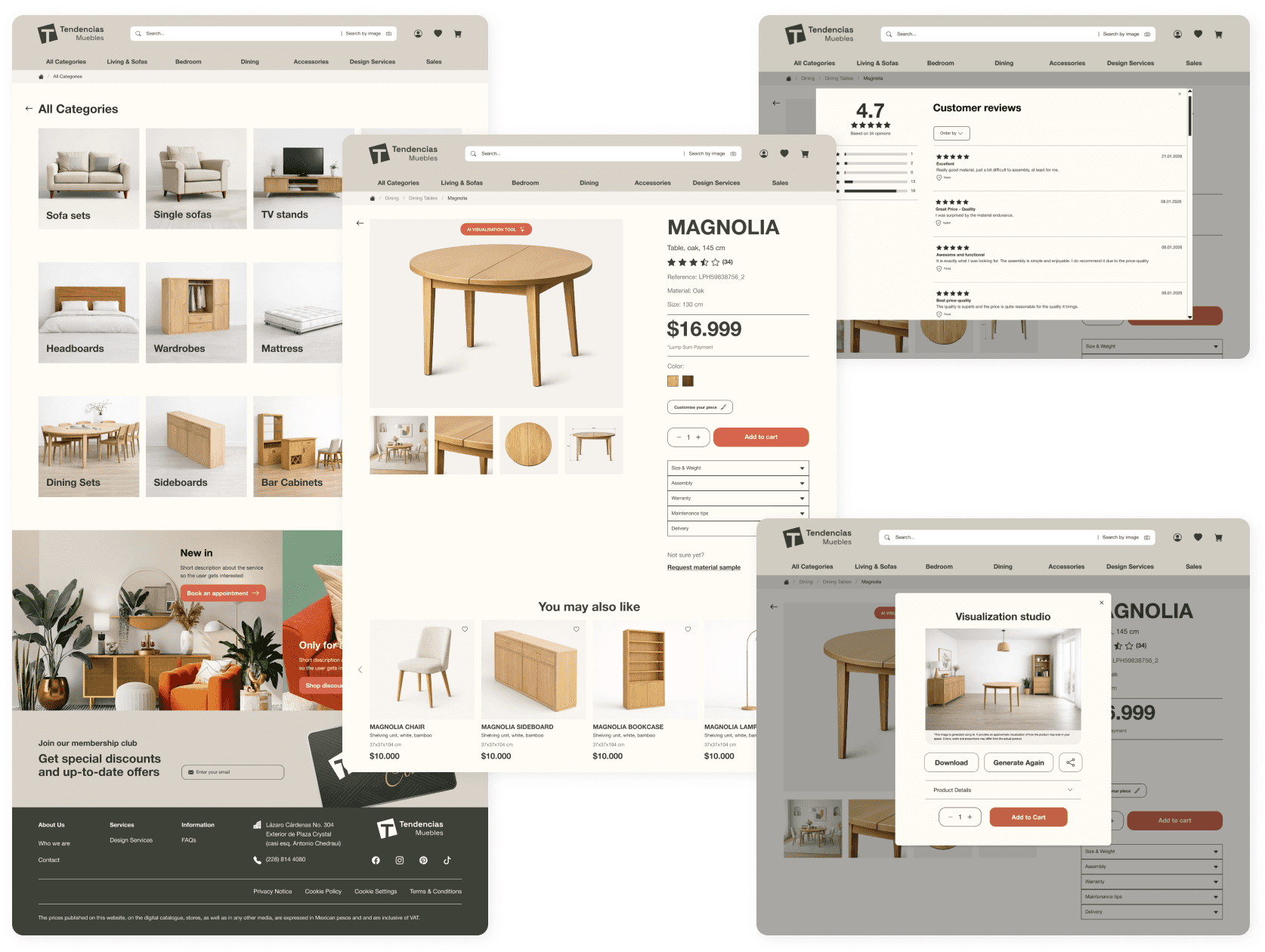
Design Decision 3: Build credibility through content and structure
Trust in e-commerce is strongly influenced by information quality and transparency.
To address this, the design emphasizes:
clearer structure
consistent presentation
removal of ambiguity
more informative product storytelling
Outcome
A more credible and reliable experience that reduces perceived risk.
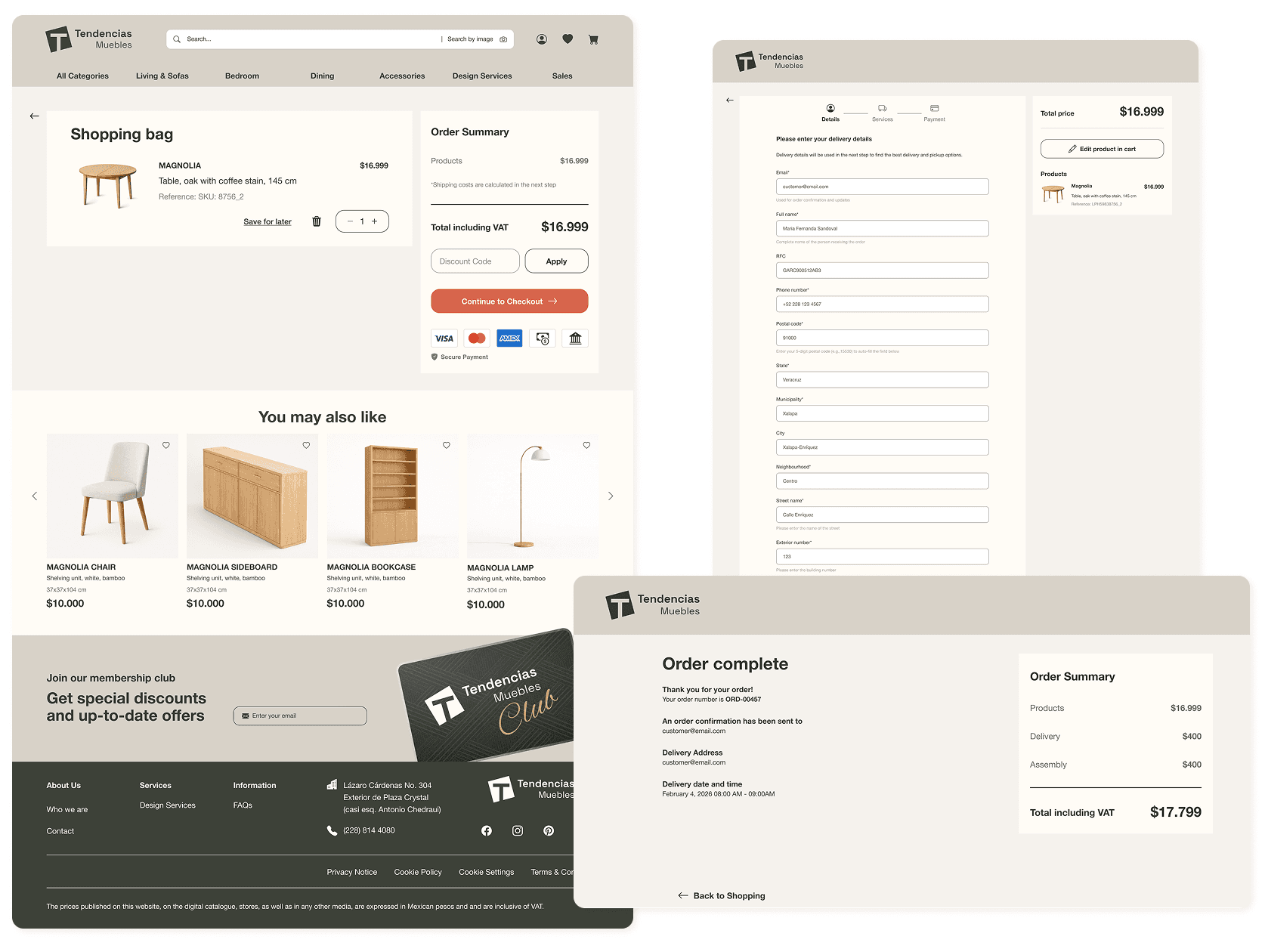
Visual Design
The visual direction balances:
warmth (home, comfort, lifestyle)
clarity (structured information)
credibility (clean, consistent UI)
The goal was not to make the site look trendy, but to make it feel reliable and decision-friendly.
Business Thinking
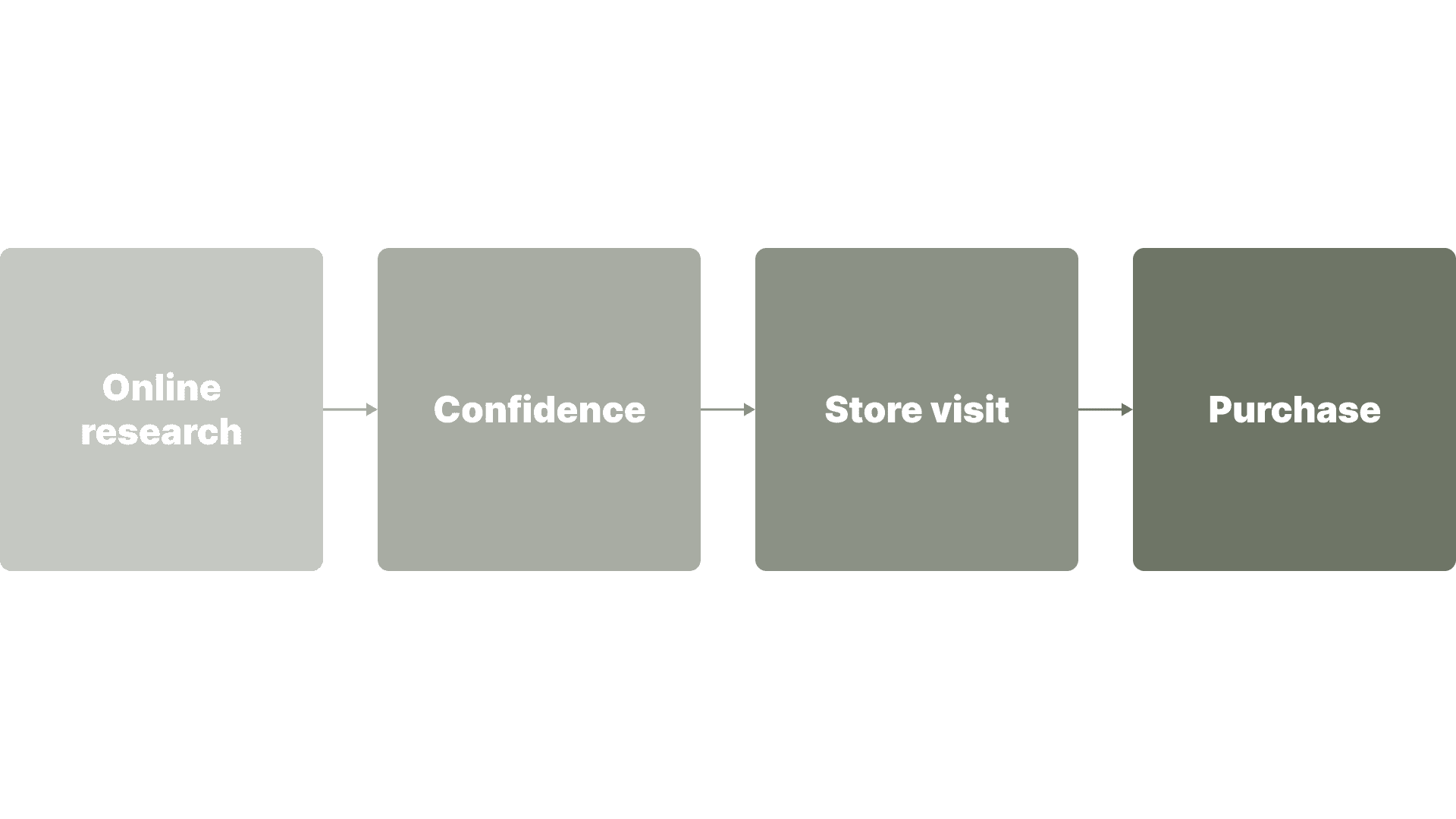
Furniture e-commerce is evolving toward experience-driven and hybrid journeys, where users move between online research and offline purchase.
By improving the online experience:
users arrive in-store more prepared
decision time is reduced
conversion likelihood increases
This positions the website as a sales enabler, not just a marketing asset.
Outcome
The redesigned experience shifts the role of the website:
from passive catalog
to active decision-support tool
Key improvements:
clearer product understanding
reduced uncertainty
stronger perceived trust
better alignment with real customer journeys
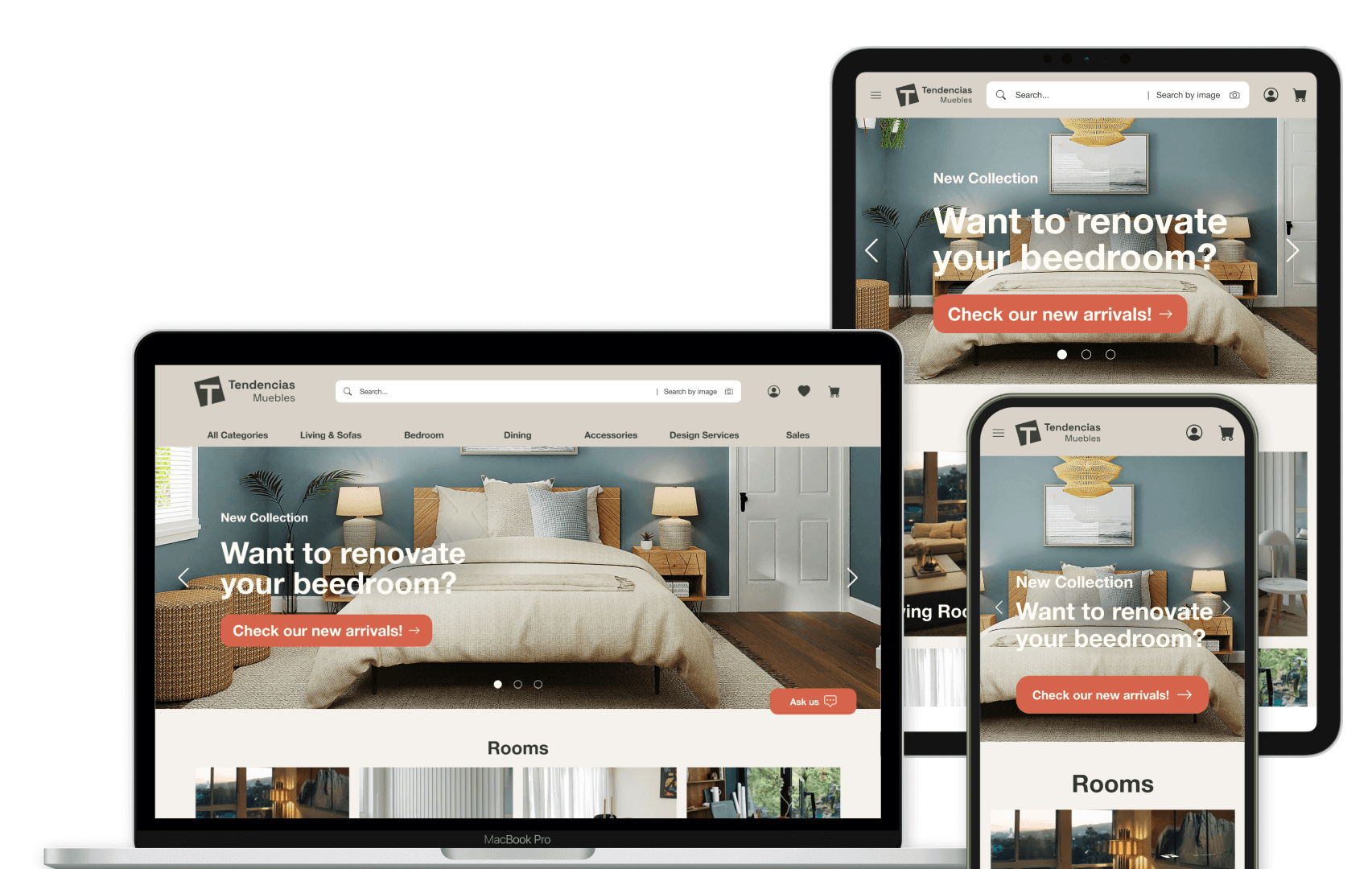
responsive design
Reflection
One of the most important takeaways from this project was how central trust is in high-consideration purchases.
Users don’t just need information — they need reassurance. And that reassurance doesn’t come from one feature, but from the accumulation of small signals:
clear content
consistent structure
transparent information
reduced ambiguity
If I had more time, I would:
test the impact of richer product visualization (e.g. 3D or AR)
validate how users transition from online to in-store decisions
explore ways to support comparison across multiple products more deeply
This project reinforced that in e-commerce, especially for expensive products, design is not just about usability — it’s about reducing perceived risk.