Scope
Competitive analysis, research synthesis, UX strategy, feature definition, UI design, business concept.
Outcome
Proposed an education-led product direction for Capiwise, combining learning, credibility checking, and risk-free practice to build trust before real investing.
Overview
Capiwise is an investment platform aiming to make investing more accessible. The project brief was to validate one strategic direction among three possible opportunities for the US and GCC markets. Early in the process, the team discovered that the real gap was not access to trading tools, but a lack of confidence, clarity, and trust among beginner investors. That insight shifted the concept toward an education-first experience.
The Problem
Interest in investing has been growing, especially among Millennials and Gen Z, but many beginners still do not feel ready to start. At the same time, younger audiences often learn from social content, where advice can be persuasive but unreliable.
We conducted an online survey and user interviews and our results showed us a similar pattern: there's interest but lack of confidence. 70% of survey responses said that not understanding how investing works stops them from trying. And 5/6 of our interviewees stated that although they are interested on this topic, they feel blocked by fear of making mistakes costing real money.
This created a clear product problem:
Many beginner investors want to invest, but feel overwhelmed, under-informed, and unsure who to trust.
For this audience, the issue was not “how do we give them more tools?” It was “how do we help them feel safe enough to begin?”

The Goal
The goal was to identify a strategic direction that would differentiate Capiwise in competitive US and GCC markets, while addressing the needs of self-guided beginner investors. Instead of competing only on brokerage features or AI assistance, the team focused on building trust through education, guided learning, and safe practice.
Success meant:
helping beginners understand investing basics
reducing the intimidation of financial language
creating a safer path from learning to real investing
positioning Capiwise as a more trustworthy platform for first-time investors
My Role
As part of a team of three UX/UI designers, we worked collaboratively and aimed to contribute evenly across the project. Because of the tight timeline, we split responsibilities at key stages to move efficiently. My main contributions included the initial competitive analysis, interview preparation, the early sitemap, and mid-fidelity prototypes for testing. I also refined the illustration style and polished the UI for the Learning Hub, lessons, and quizzes. For the final pitch deck, I led the high-fidelity prototype walkthrough and developed the business plan.
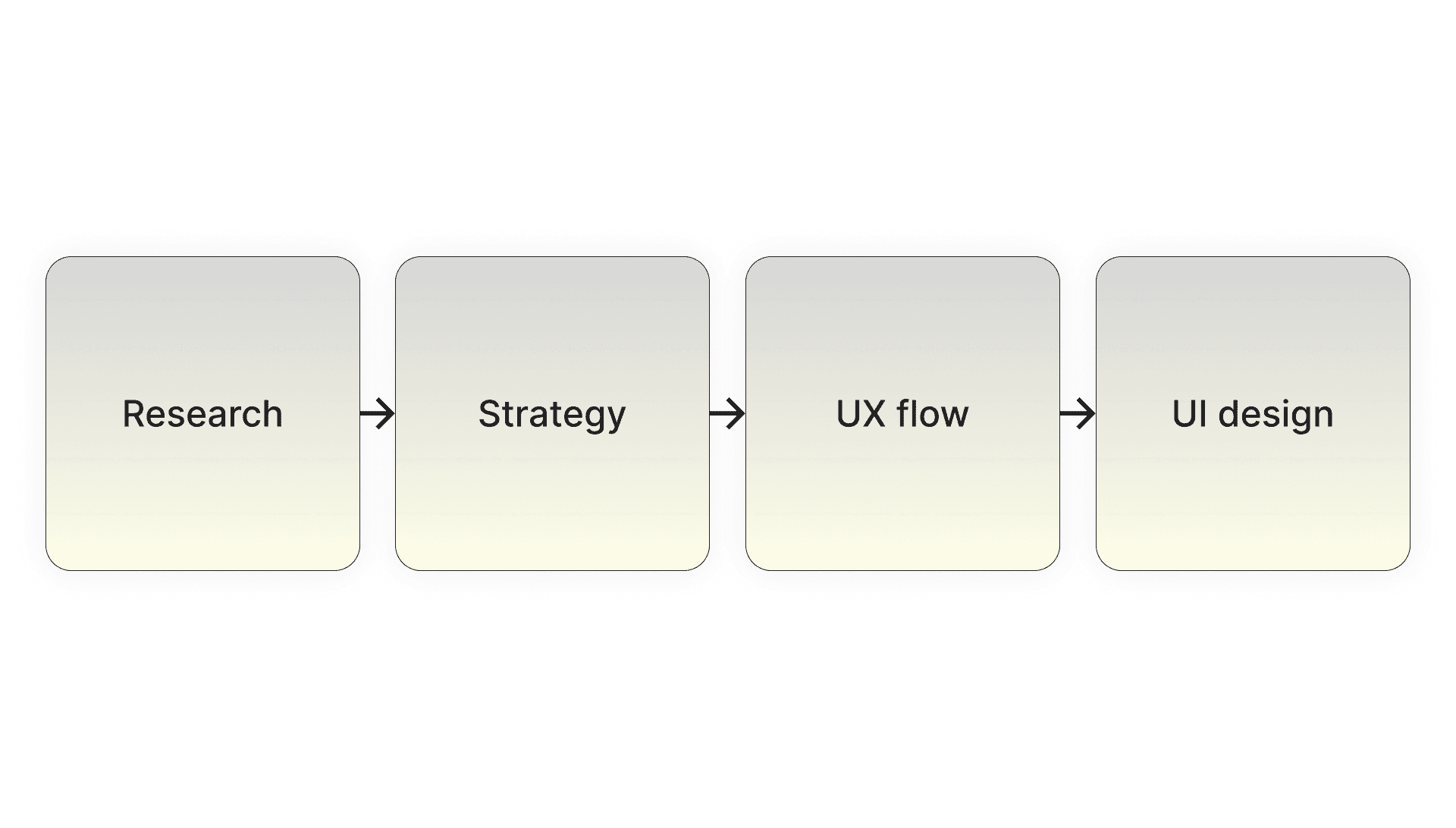
Research and Discovery
The team began with a broad competitive and feature analysis across the US and GCC markets, comparing Capiwise against major competitors and evaluating three possible strategic directions. This amounted to six competitive analyses. The review showed that many competitors already offered robust broker experiences, AI capabilities, and conversational assistants, but were weaker in educational content and scenario-based simulations.
In parallel, the team conducted an online survey and gathered research insights on beginner investors. Two patterns stood out:
Interest in investing was high.
Confidence and preparedness were low.
This changed the framing of the challenge. The opportunity was not to make investing look smarter. It was to make learning feel safer, clearer, and more trustworthy.

Key Insights
From the research, three insights shaped the final direction:
1. Beginners do not lack access. They lack confidence.
Brokerage products already exist in abundance. What many first-time users are missing is enough understanding to act without fear.
2. Social media has become a financial education channel, but not a reliable one.
Beginner investors are often exposed to simplified, exaggerated, or misleading claims that are hard to evaluate.
3. Users need a bridge between theory and action.
Educational content alone is not enough. People need a place to practice and test decisions before using real money.

Defining the Opportunity
The team reframed the challenge around one central question:
How might we help beginner investors move from curiosity to confident action without overwhelming them or asking them to trust the wrong sources?
That led to a product direction built on three principles:
Teach simply
Verify information
Practice safely
This became the foundation for the MVP.
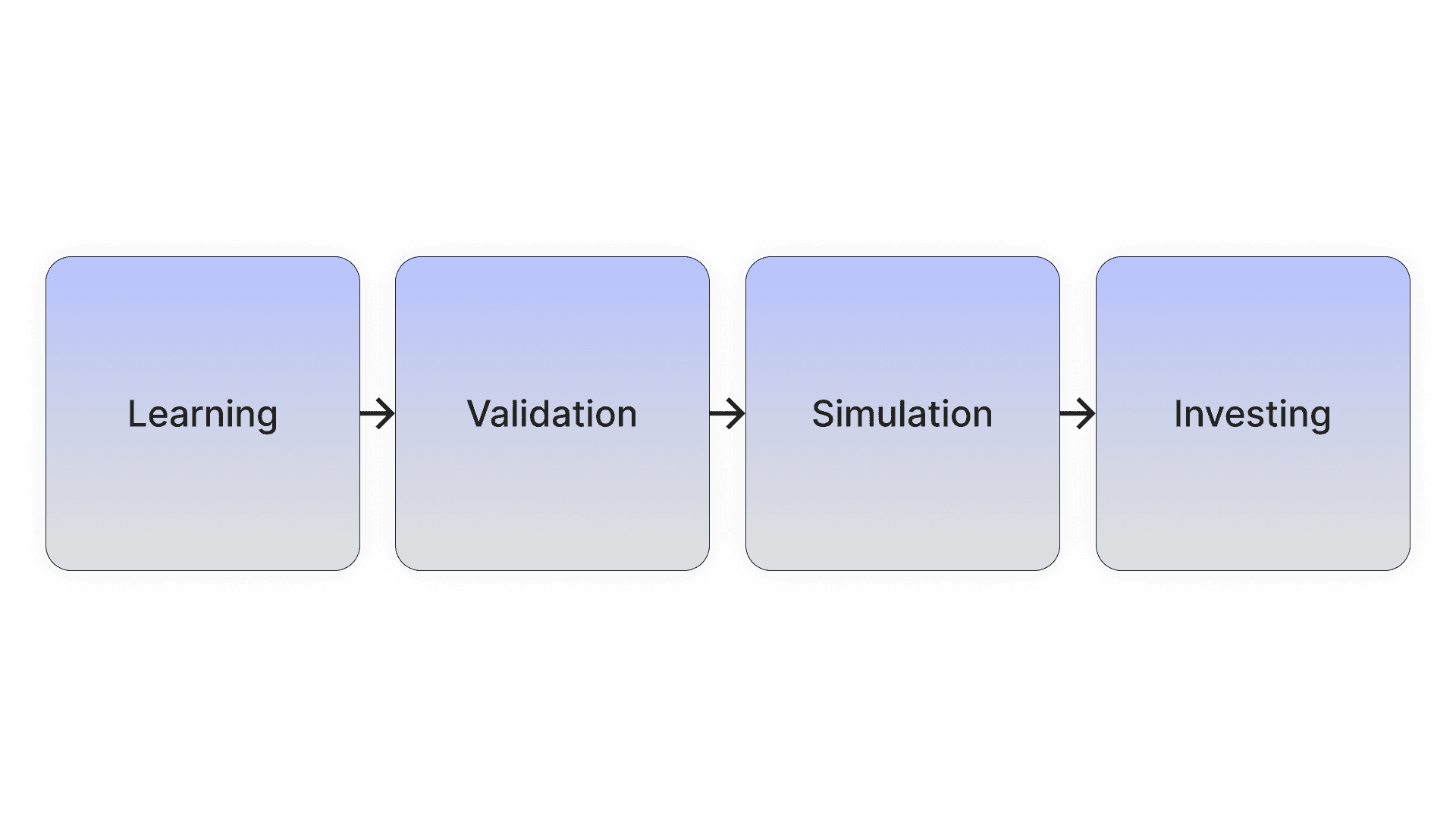
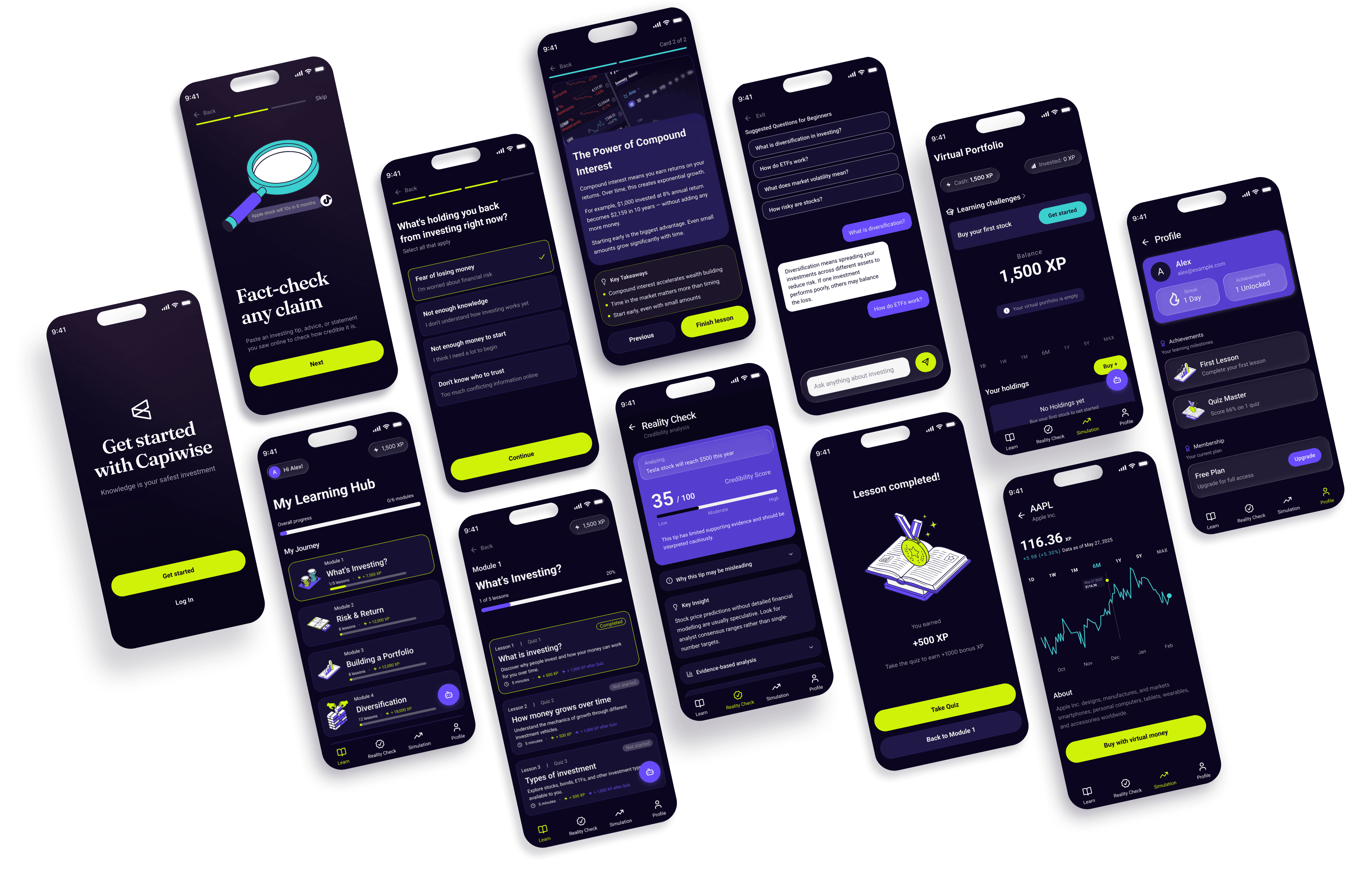
We designed an education-first concept made up of three connected features: Learning Hub, Reality Check, and Portfolio Sandbox. Together, they help users build knowledge, question unreliable claims, and practice investing in a low-risk environment before moving into real investing mode.
Design Decision 1: Build trust through structured learning
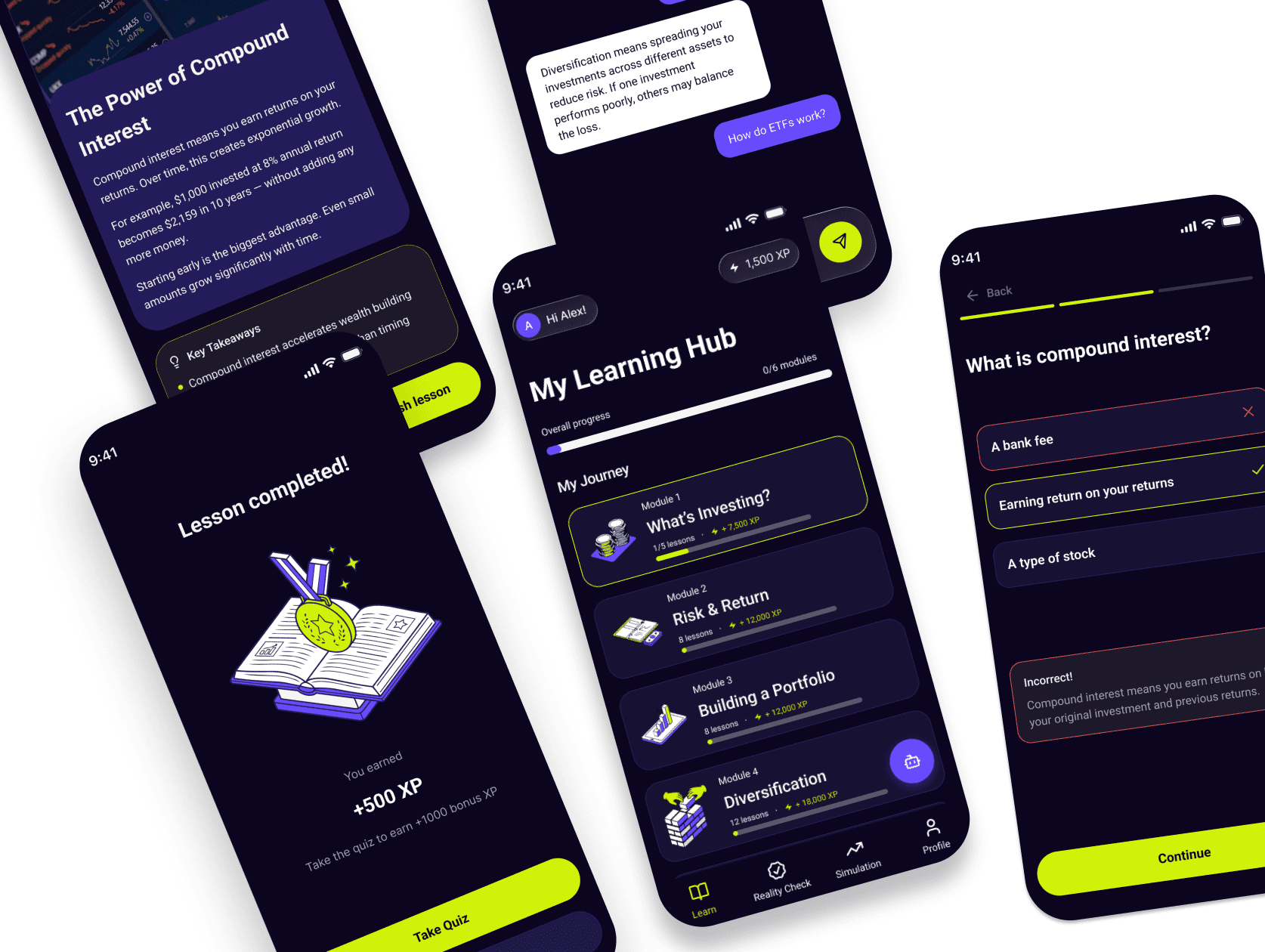
We introduced a Learning Hub with modules, lessons, quizzes, and an AI co-pilot. The structure was designed to feel predictable and easy to follow, giving beginners a clear path instead of dropping them into a full investing interface too early. After each lesson, short quizzes reinforced what users had learned, while the AI co-pilot gave them a way to clarify doubts in context.
This mattered because the target user did not need more complexity. They needed clear explanations, a sense of progress, and a format that lowered the emotional barrier to getting started.
Design Decision 2: Help users challenge unreliable financial advice
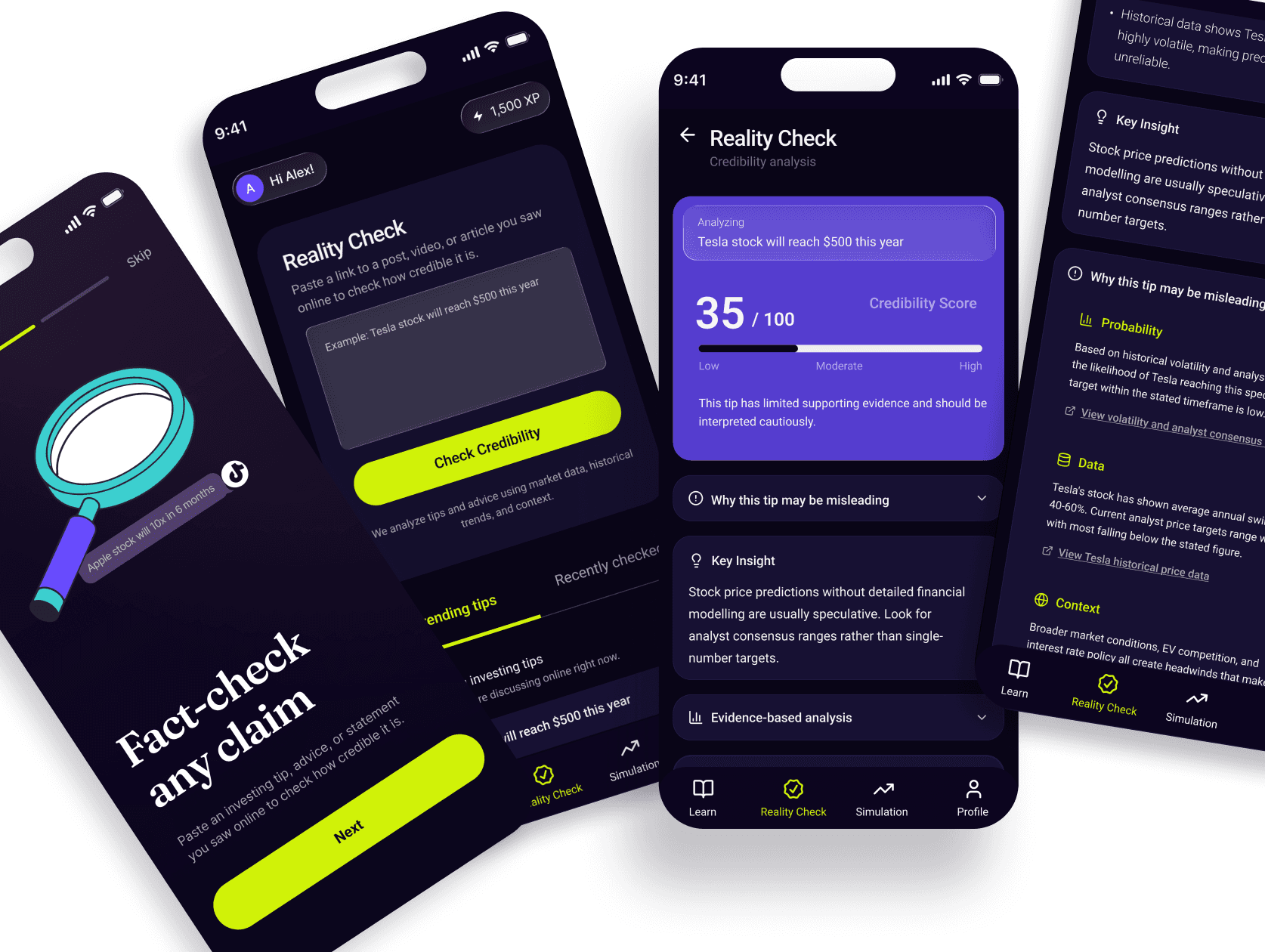
To address misinformation, the concept introduced Reality Check, a feature where users can paste a financial claim and receive a credibility score with supporting logic based on data, probability, and context.
This feature directly responds to the way many younger users currently consume financial content: through fast, persuasive, and often unverified social media advice.
Why this mattered:
The design is not just educational. It also acts as a filter against bad guidance.
Design Decision 3: Reduce fear by letting users practice before investing
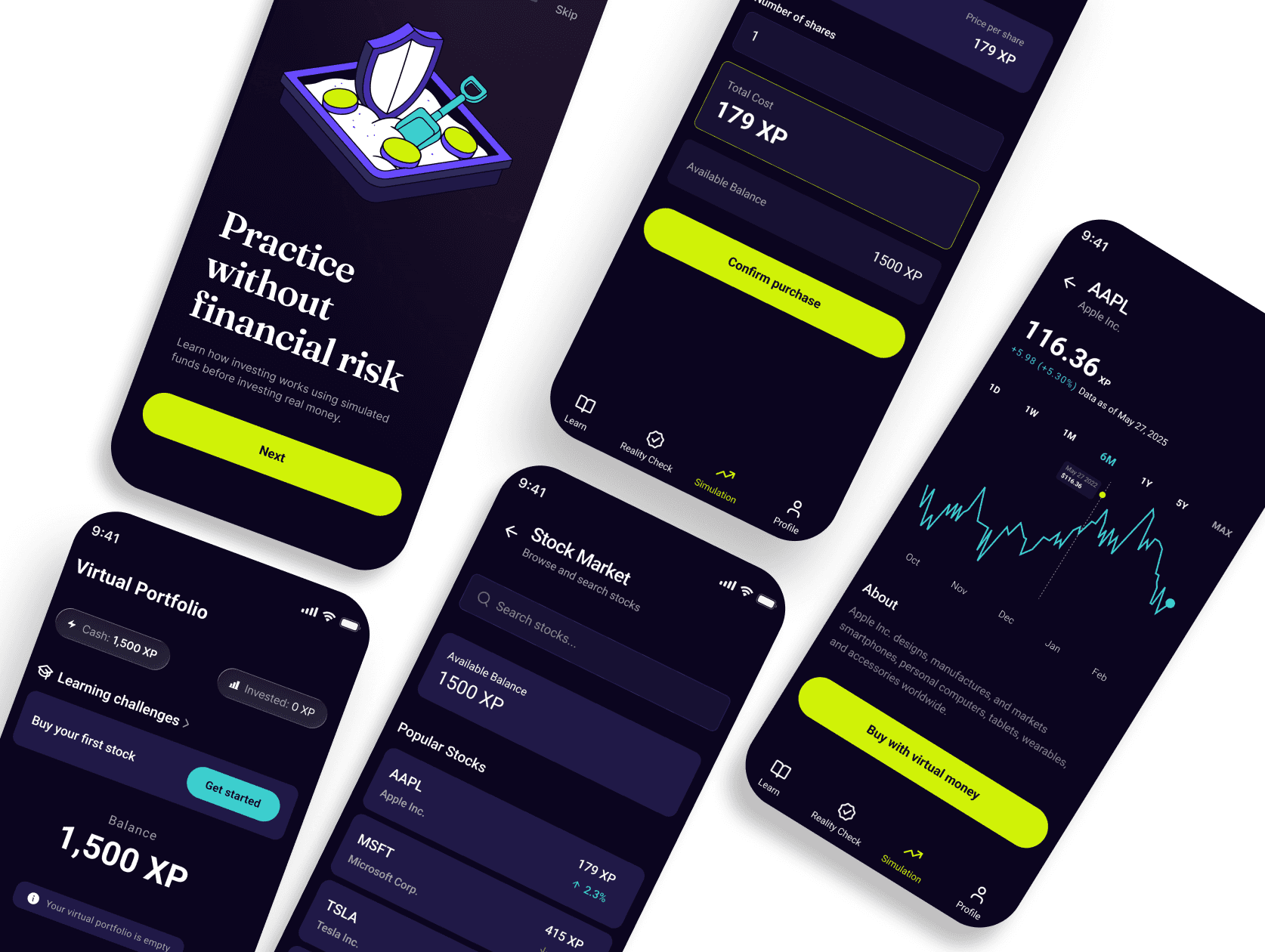
The concept also included Portfolio Sandbox, a simulation environment where users could practice investing using points earned through lessons and quizzes, with 1 XP mapped to $1. The sandbox mirrored the real investing environment to make the transition feel familiar and less intimidating.
Users could complete guided challenges or explore independently.
Why this mattered:
Knowledge without application often stays abstract. Simulation turns passive learning into active confidence-building.
Design Decision 4: Create a seamless path from education to action
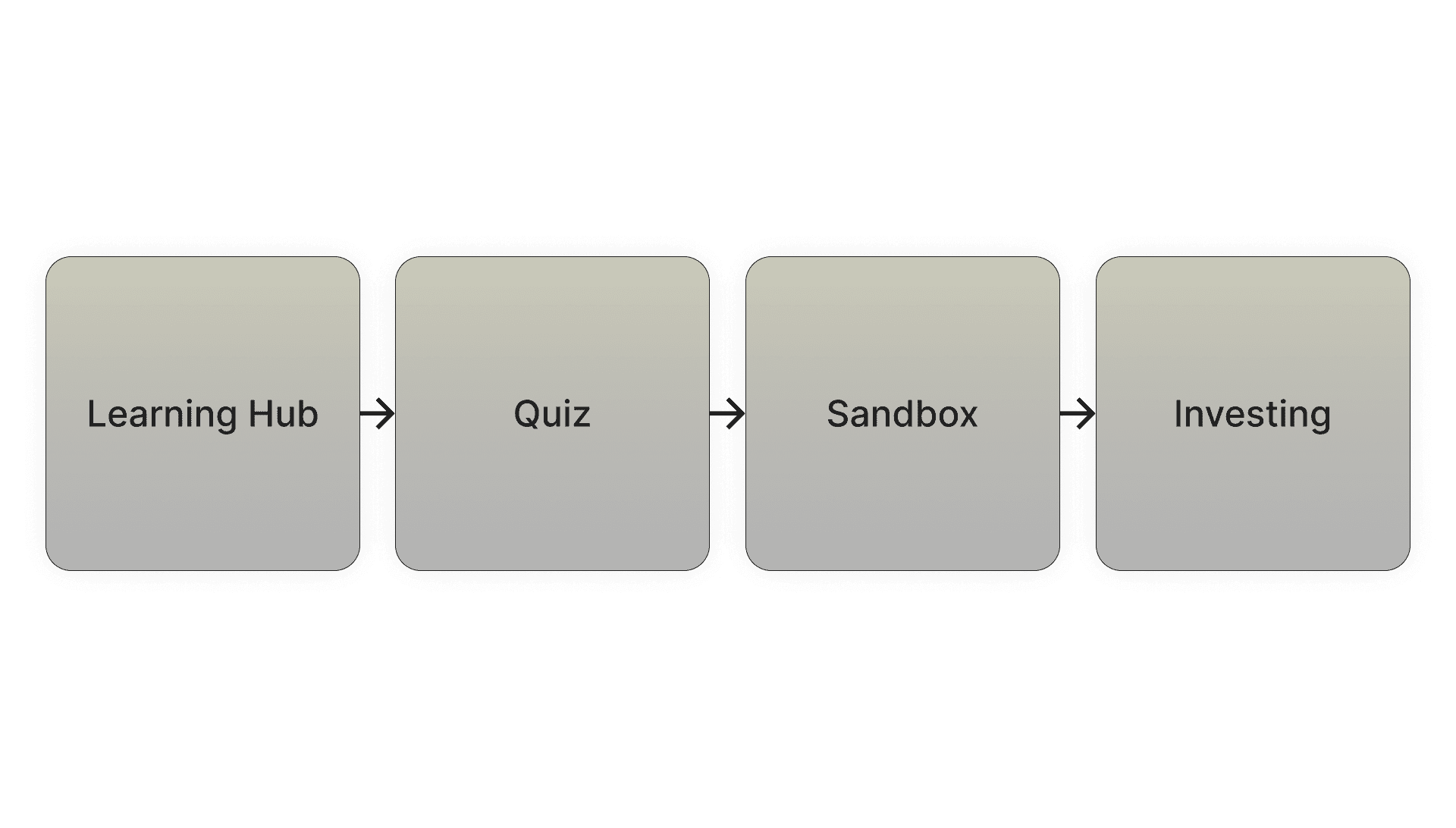
A key part of the strategy was keeping education inside the same ecosystem as investing. Users could move from Education Mode to Investing Mode without changing platforms, carrying over familiarity from the sandbox and copilot experience into the live product.
Why this mattered:
This made the concept stronger from both a user and business perspective. Users gain continuity, and Capiwise gains a clearer path to long-term retention and monetization.
Visual Design
The visual direction retained Capiwise’s dark interface, typography, and existing palette while adding indigo and lime mint accents to make the experience feel fresher and more approachable for a younger audience. Accessibility was also a priority, with attention paid to contrast and layout clarity.
The visual goal was not to make finance look playful for the sake of it. It was to preserve seriousness and trust while making the product feel less intimidating and more inviting for first-time investors.
Business Thinking
To support the concept strategically, we proposed a subscription-based model for Education Mode, starting with a 14-day free trial and premium monthly or annual plans. Once users transitioned into real investing, Capiwise would also generate revenue through investing activity such as transaction fees or spreads. This created a dual revenue model: paid education plus platform activity.
This mattered because the concept was not only useful for users. It also gave the client a stronger positioning angle and a more coherent business case.
Outcome
The final concept repositioned Capiwise as more than a standard investing platform. Instead of competing only on brokerage functionality or generic AI features, it offered a clearer and more differentiated promise: help beginner investors learn, verify, practice, and then invest with more confidence.
Given the short timeline, the main outcomes were strategic rather than post-launch metrics:
a clearer target audience
a stronger market positioning
a differentiated education-led concept
a business model aligned with user trust and long-term engagement
Reflection
One of the strongest takeaways from this project was how AI helped speed up the process without replacing design judgment. The team used AI to summarize materials, support strategy, and quickly test ideas through mid-fidelity prototyping. But the more polished the work needed to become, the more obvious the limitations of AI-generated outputs became. The final design only felt strong after the high-fidelity work was rebuilt more intentionally from scratch.
That reinforced a useful lesson for me: AI is effective for acceleration, iteration, and idea filtering, but strong design still depends on human taste, judgment, and specificity.